Dos & Don’ts for Sealing Concrete in Summer Heat
From flash time to bubbling, summer heat changes the rules for sealer application. Here’s how to get it right.
Sealing concrete in summer heat gets tricky. The heat changes how fast solvent flashes off, how much air the slab’s pores trap under a fresh coat, and how much working time you actually have. Normal sealer jobs can turn into callbacks if you don’t adjust for the heat. Here’s what to do differently once summer sets in and temps rise.

Common Summer Sealing Risks
Heat can quickly cause common sealer failures, including:
- Failed Adhesion: Missed recoat windows that prevent a proper bond.
- Bubbling: The sealer skins over too fast, trapping solvent underneath.
- Blushing and Milkiness: Residual moisture gets locked beneath the sealer film.
- Streaks and Spider Webs: Inconsistent finish from fast evaporation and poor leveling.
Learn more about fixing a cloudy, bubbling or peeling sealer.
DOS FOR SUMMER SEALING
Schedule around the heat, not just your calendar
Don’t let a mild forecast fool you. A slab that’s cool at 7 a.m. can climb past 100°F by 11. Concrete acts like a heat sink. Once the sun hits it, the surface temperature climbs fast and stays hot long after the air temperature cools off, often into the evening. That’s why evening application isn’t a safe bet.
Morning is the best time for sealing. But don’t swing too early either. Sealing before overnight dew has evaporated traps that moisture under the sealer, causing blushing and milkiness. Plan your window for after the dew’s gone but before the slab heats up.
Pro Tip: If your timing isn’t flexible, a shade canopy over the work area can buy you a wider window. Blocking direct sun keeps the slab cooler longer, even at midday.
Check surface temperature, not just air temperature
Air temp and slab temp are two different things. A forecast that says 82°F doesn’t mean the slab is at 82°F. In fact, in summer a slab can run 20 to 40 degrees hotter than the air, with surface temps exceeding 130°F on the hottest days.
Get an infrared thermometer and check the slab directly before you seal. A patio that’s 78° at 8:00 can be 92° thirty minutes later. Brickform’s application guidelines call for air and surface temperatures between 45°F and 85°F.
Did You Know? One side of a slab can sit in shade while the other bakes in direct sun. That difference can cause uneven sealer performance across a single job, with the sunny side more prone to bubbling or adhesion problems while the shaded side dries and bonds normally.
Keep an eye on rain too. Applying over leftover moisture, even without visible puddling, can leave the sealer soft or hazy. If it’s rained recently, give the slab extra dry time before sealing. It’s also worth checking for sprinkler zones near the slab and adjusting timing so the concrete isn’t getting hit right before you seal.
Run a jobsite sample before sealing the whole slab
Heat drops your open time. What takes twenty minutes to tack up in spring might take half that in July. You need to know what to expect before you’re mid-slab and struggling to keep up. The ideal setup is a small test slab off to the side, but that rarely happens on smaller residential projects.
“A more realistic approach is to seal a small, inconspicuous area first to verify the appearance and performance before sealing the entire project.”
— Johnny D., Brickform trainer
Apply thinner coats than you would in cooler months
This is the single most important thing to get right in summer heat. Thin to win, especially once temperatures climb. Solvent evaporates faster in the heat. A coat that skins over cleanly in April can flash too fast in July, trapping solvent underneath and causing bubbling or a blushed, hazy finish.
“Honestly, your coats should be so thin that you don’t have to backroll. You need to be really diligent about not letting it pool. The goal isn’t full coverage in one pass. Aim for something like 60 to 65 percent on your first coat, then fill in the rest on your next pass with the sprayer.”
– Antonio Thomas
Stamped concrete makes this a challenge. Deep grout lines and heavy textures collect sealer fast. Watch for pooling as you spray, and adjust before it collects. If it does pool, back roll immediately. Wait too long in extreme heat and the sealer skins over. Back roll now and you get streaks or spider webs. Work in pairs, one spraying, one back rolling right behind only if necessary.
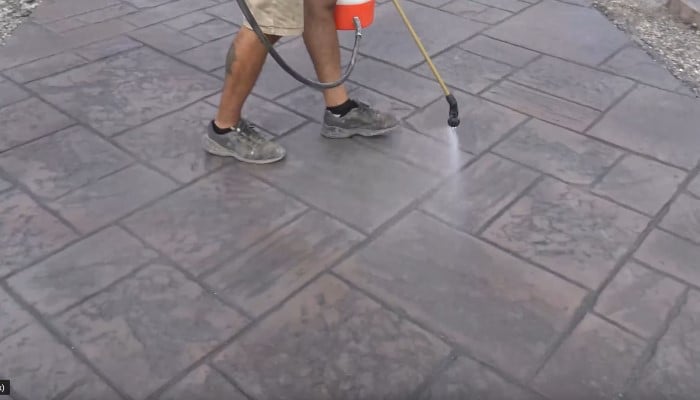
Recommended equipment: DS-8350 Acetone Sprayer for acetone-based sealers, with a Precision Tip for consistent, drip-free coverage.
Consider a hybrid sealer when the forecast isn’t cooperating
Straight film-forming acrylics are most prone to bubbling on a hot slab, since there’s a full film to trap expanding air or solvent underneath. A penetrating sealer avoids that problem but won’t give you color enhancement.
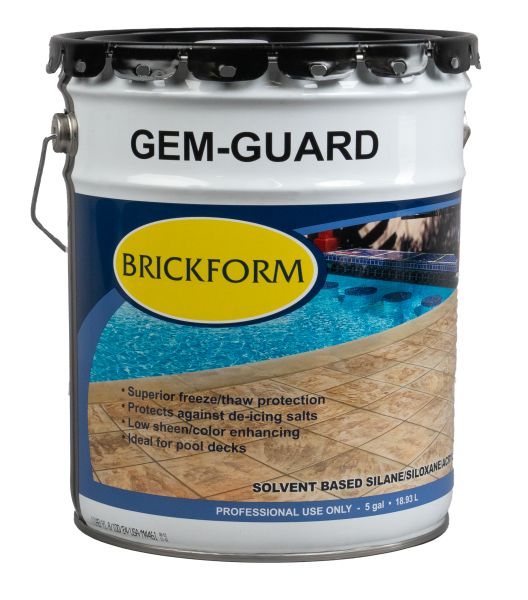
A hybrid splits the difference. Enough acrylic content to enhance color, without a full film to trap as much underneath. Gem-Guard SB is our hybrid that’s less prone to bubbling than a higher-solids sealer. But it can still bubble if overapplied. So the strategy is the same: multiple light coats, applied during the cooler part of the day.
Get help picking a sealer: What’s the Best Sealer for Your Project?
DONT’S FOR SEALING CONCRETE IN HOT WEATHER
Don’t let sealer sit in a hot truck or direct sun before you use it
Product viscosity and open time change if the material’s already cooking before it hits the slab. Store sealer in the shade on the jobsite and keep it out of a hot truck bed between stops.
Don’t ignore wind on top of heat
Wind and heat together dry the sealer faster than either one alone, and wind brings its own problem: dust, dirt, and leaves land in a wet sealer and set there. Brickform’s own guidelines list windy conditions as a reason not to apply, right alongside direct sun and high heat. If it’s blowing, wait for it to calm down rather than trying to work around it.
Don’t rely on your usual timing between coats
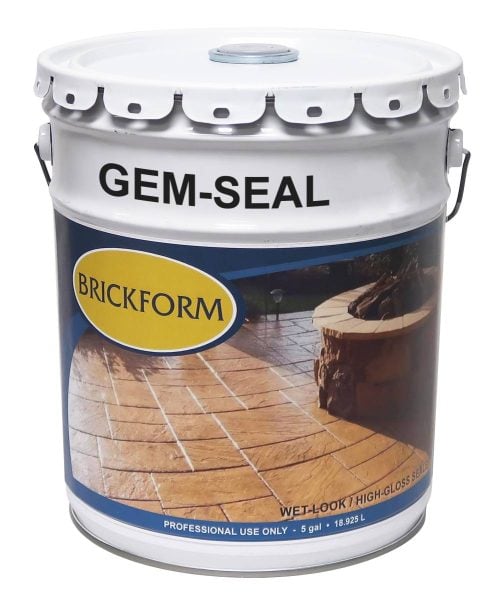
Recoat windows shrink right along with your open time. Brickform’s Gem-Seal TIS calls for the sealer to be tack free before you apply the next coat, and tack-free time drops fast in summer heat. Wait your usual interval in July and the surface may already be skinned over. At this point it’s too hard for a good intercoat bond.
Start checking tackiness early. Touch a test area lightly. If it’s tack free, apply your next coat. If it’s hard, you’ve already missed the window. Watch the sealer, not the clock.
Don’t assume dry to the touch means ready for traffic
Heat speeds up how fast the sealer feels dry, not how fast it’s ready for traffic. Brickform recommends keeping foot traffic off for 24 hours and waiting 72 hours before heavy traffic, no matter how quickly it may feel dry in the heat.
Pro Tip: In a 100-VOC state like California, Utah, or Colorado, solvent kicks off even faster. Move quickly, keep coats light, and don’t apply in the evening. Concrete holds heat long after the sun goes down.

Don’t forget your insurance
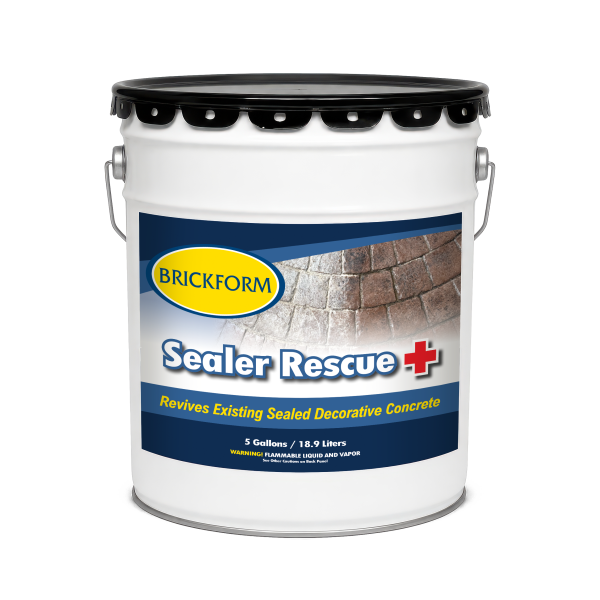
Even with good timing and technique, summer heat can still cause concrete sealer problems. If you end up with a bubbled or cloudy patch despite doing everything right, Sealer Rescue+ can often re-emulsify the sealer and fix it without a full strip. Keep some on hand during peak season.
FAQs
What time of year should you seal concrete?
Spring and fall give you the most forgiving conditions, but summer works fine if you plan around the heat. Aim for air and surface temperatures between 45°F and 85°F, and schedule around the hottest part of the day rather than avoiding the season altogether.
How hot is too hot to seal concrete?
Once the slab surface climbs past 85°F, solvent evaporates too fast for the sealer to form a proper film. That’s when you start seeing bubbling, blushing, and adhesion problems. Check the surface with a thermometer, not just the weather app.
Should I spray or roll sealer in hot weather?
Spraying is usually the better call, especially in summer. It lays down thinner, more even coats than rolling, which matters when solvent is already flashing off fast in the heat. Rolling tends to leave thicker, uneven puddles that are more likely to skin over and trap something underneath.
Can you seal concrete after a summer rainstorm?
Give it time. Let the surface fully dry, not just look rain-free, before you seal. A slab that looks dry an hour after a summer storm can still be holding moisture below the surface. The same goes for morning fog or heavy dew. Not looking wet doesn’t mean no moisture. Brickform’s own guidelines call for skipping application on rainy or foggy days, since excess moisture keeps the sealer from drying properly. When in doubt, wait a full day and check again.
How do you know if a slab has too much moisture to seal?
If the slab was pressure washed, rained on, or has visible damp spots, give it more drying time. When in doubt, wait another day.
Remember, summer heat doesn’t have to mean more callbacks. Watch your temperatures, keep your coats thin, and know what products to use. For more concrete sealing tips, see How to Apply Concrete Sealer. If a job’s already gone sideways, check How to Fix Cloudy, Bubbling, Peeling, or Worn Concrete Sealer.
Contact your distributor for product availability, or visit the Tech Docs section full technical data sheets.
See More