A Better Way to Etch Concrete: More Control, Less Hassle
A more consistent, simpler way to etch concrete, without the guesswork of mixing acid on site

Muriatic acid has been used for concrete surface prep and efflorescence removal for decades, but working with it has always come with real downsides. Acid etching works by reacting with the cement paste at the surface. When used for surface prep, this creates the ideal bonding surface for overlays and coatings. A gelled acid produces the same reaction, but is simpler to use and more reliable than handling concentrated muriatic acid on the job.
WHY CONTRACTORS ARE MOVING AWAY FROM MURIATIC ACID
When working with muriatic acid, experience teaches you how to adjust dilution and dwell time, but every slab reacts differently. Surface density, finishing methods, temperature, and age all affect the reaction.
Get the mix too weak and the slab may not develop enough profile. Get it too strong and it will over-etch, weakening the surface. Once it’s down, you’re judging the reaction in real time, and what worked on the last job isn’t guaranteed to work on the next.
You know the problems: uneven etching, runs and pooling, corrosion, and more. Precision is hard to guarantee with muriatic acid. You need more control.
WHERE ETCHING WITH A GEL WORKS BEST
Using a gelled acid, like Micro Finish Gel, solves these problems. We designed it for:
- Surface preparation. Gets the concrete ready to accept sealers, overlays and coatings.
- Efflorescence removal. Clears the white mineral deposits that form on cured concrete.
- Exposed aggregate touch-ups. Fixes spots that came out under-exposed or uneven compared to the rest of the slab.
Beyond that, it’s a solid option for decorative work, including:
- Decorative acid wash finishes. Get a sand wash or light aggregate exposure on concrete that’s already cured.
- Decorative stenciling. An adhesive vinyl stencil masks the surface, the gel etches only the exposed design area.
- Aging a tight-finish stamped surface. Gives the slab a broken-in, natural stone look instead of a freshly stamped texture.
- Vertical surfaces. The gel’s thickness keeps it in place for deep cleaning, prep for vertical coatings, or a sand finish on walls.
Note: If you need to achieve an aggressive profile (beyond CSP 3), or you’re working with a tight, dense finish or older concrete that resists etching, grinding or shotblasting may be the more efficient choice.
Did you know? Acid etching has traditionally been associated with CSP 1, the lightest of ICRI’s ten surface profiles. Micro Finish Gel changes that. With patience, reagitation, and multiple applications, it can take you from a CSP 1 up to a CSP 2 or 3.
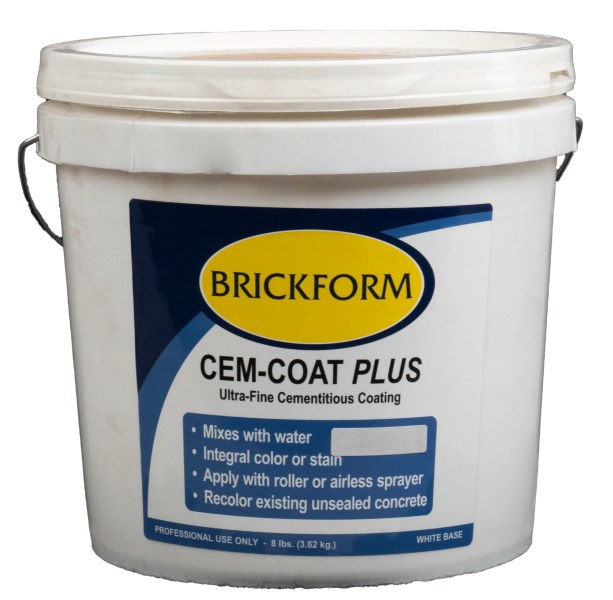
- CSP 1: Feels like cardstock or fine automotive sandpaper. Best for sealers, stains, and thin coatings like Cem-Coat Plus.
- CSP 2: Feels like 100 to 150-grit sandpaper. Best for overlays like SM Pro.
- CSP 3: Feels like 60 to 80-grit sandpaper. Best for Stampable Overlay and high-build epoxies.

WHAT CHANGES WITH AN ETCHING GEL
Here’s what’s different with a controlled gel, like Micro Finish Gel:
- Ready-to-use. No mixing with water, no dilution ratio to get right or wrong.
- Longer reaction window. Let it sit and do its work, then reagitate if needed.
- Stays in place. No running, no pooling, no lap marks from uneven coverage.
- Consistent coverage. Even application means an even reaction across the slab.
- Spray or brush application. We recommend a Swissmex acid sprayer.
With a gelled acid, you’re not giving up etching ability. It’s a consistent way to achieve the profile you need. No mixing on site, no racing an unpredictable reaction. It’s still an acid, though. Proper PPE, ventilation, and neutralization still apply, same as any etching job.
“This is a shift in technology. Gelled acid etching is becoming the new standard, especially on large jobs where consistency across the whole slab matters.”
– Antonio Thomas, Brickform team member
STEP-BY-STEP: ETCHING CONCRETE WITH GELLED ACID
Here’s how the process runs from start to finish.
- Check the slab. Confirm that you’re working on bare concrete so etching can do its job. If there’s an existing sealer or coating, remove it with Strip-It.
- Dampen the surface. Moisture slows absorption and keeps the gel from disappearing into the pores.
- Apply. Use an acid-resistant sprayer or brush for even coverage. Apply gel liberally for profiling work, and keep it wet.
- Let it dwell. For surface prep, give it 10–12 minutes. Reagitate periodically to keep the reaction going, either by hand or with a swing buffer to work the gel into the pores.
- Rinse thoroughly. Any gel left on the surface keeps reacting, so don’t stop until it’s fully cleared.
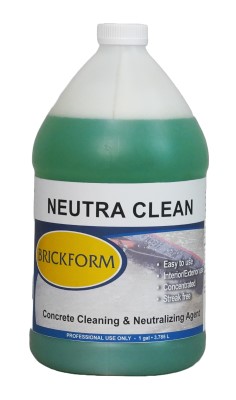
- Neutralize. Stop the reaction by applying Neutra Clean. This prevents over-etching and acid residue that interferes with bonding down the line. Acid changes the pH of the concrete surface, so neutralizing before sealing is essential.
- Clean the slab. Pressure wash or scrub with clean water before moving to the next step, whether that’s an overlay, stain, or coating.
Pro Tip: If the profile isn’t deep enough after the first rinse, reapply and repeat before neutralizing. Once the slab is clean and dry, test absorption in a few spots with clean water. The water should darken the concrete immediately and absorb evenly without beading. Uneven absorption means those areas need more prep.
Muriatic acid isn’t going anywhere, and when the job calls for it, there’s nothing wrong with reaching for it. But if you’ve been putting up with the guesswork because that’s just how it’s always been done, it doesn’t have to be. The choice is whether you want to keep guessing, or start knowing.
See More