12 Acid Staining Dos & Don’ts for Great Color on Every Job
Learn how to achieve beautiful, lasting color with acid stains, no matter the finish

Acid staining is one of the most popular decorative concrete techniques for creating rich, variegated finishes that bring out the natural character of concrete. Unlike paint or topical coatings, acid stain penetrates the surface and reacts chemically with the minerals in the concrete, producing unique, permanent color variations that can’t be replicated.
Because these results are lasting, precision at every stage—from surface prep to application and sealing—is essential. To help ensure a successful outcome, here are some key dos and don’ts to keep in mind when working with acid stain.
DOS
To get the most out of your acid staining project, it’s important to follow proven best practices. These key “dos” will help you achieve even color, long-lasting results, and a professional-grade finish every time.
Do start with proper surface prep.
Acid stain can only react with clean, bare concrete. Ensure the surface is free of coatings, sealers, oils, or adhesives, and that it has a concrete surface profile (CSP) of 1–2. Any residue left behind can block the chemical reaction and lead to uneven or weak color.
Do use a high-quality stain.
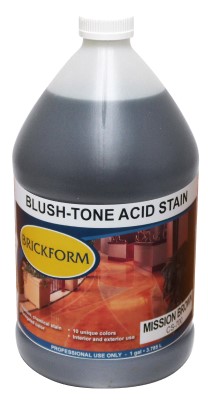
The quality of the stain determines the depth, consistency, and longevity of your color. Professional-grade products, such as Brickform’s Blush-Tone Acid Stain, contain carefully balanced chemical formulations that produce vibrant, lasting hues and reliable reactions. Investing in a premium stain ensures better control, more predictable results, and a finish that stands the test of time.
Do test the stain on the actual slab.
Because acid stain reacts differently based on porosity, age, and surface finish, it’s important to do a test section on the same concrete that will be stained. This small sample will reveal how the final color develops and help you adjust dilution or application techniques before treating the full area.
“One of the biggest misconceptions is thinking acid stain will look as expected. The color of the acid stain in the jug is not the color of the final product.
–John Reynolds, Brickform Technical Expert

Do remember that finish determines results.
The texture and finish of the concrete play a major role in how stain color appears.
- Exposed aggregate or weathered concrete has less surface cream and won’t react as strongly, resulting in lighter color.
- Textured or stamped finishes allow stain to collect in low areas, intensifying color and etching more deeply for added visual variation.
- Hard-troweled surfaces produce rich tones with lots of color variation.
- Broomed finishes tend to absorb stain more evenly for monochromatic color.

Do apply the stain correctly.
Follow manufacturer recommendations for dilution ratios and application methods when acid staining. Spray or brush the stain evenly, keeping a wet edge and allowing the chemical reaction to occur without overworking the surface. Patience pays off. Uneven or rushed applications can disrupt the natural, variegated patterns that make acid stained concrete so appealing.
- Apply to a damp, not wet, surface. Lightly damp concrete helps control reaction speed and promotes even coverage. Avoid standing water, which can dilute or streak the stain.
- Avoid walking through wet stain. You’ll end up with footprints that show on the finished surface.

Do seal the surface.
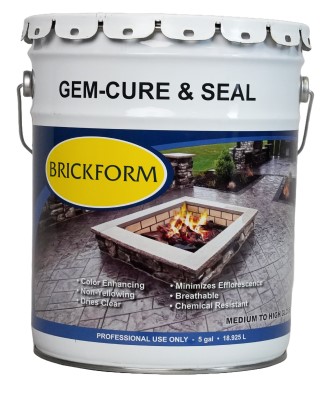
Sealing is essential for protecting the stained concrete and enhancing its depth and vibrancy. Brickform concrete sealers, such as Gem Cure & Seal 350, bring out the richness of the color while providing a durable layer against wear, water, and UV exposure.
- Solvent-based acrylic sealers deliver the best color enhancement and “wet look.”
- Water-based sealers are lower in odor but won’t produce the same visual depth.
- Use an acetone sprayer with a precision fan tip for smooth, even coverage and to avoid streaks or “fingers.”
Do use proper safety gear.
Acid stain is a reactive chemical, so safety a must. Always wear goggles, acid-resistant gloves, and a respirator, and protect skin from splashes. Cover nearby surfaces, plants, and fixtures to prevent accidental damage from overspray or drips. Safe, controlled work practices ensure a successful project.
DON’TS
Just as important as knowing what to do is understanding what to avoid. Steering clear of these common mistakes will save you time, money, and frustration—and ensure your acid-stained surface looks as good as it performs.
Don’t apply acid stain over sealed or contaminated concrete.
Acid stain must penetrate the concrete surface to react properly. If the slab has been sealed, painted, or contaminated with oil, grease, or adhesives, the stain will sit on top rather than bond chemically. Always test for absorption before application to ensure the surface is ready.
Don’t rush the process.
Each step of acid staining—cleaning, reacting, rinsing, drying, and sealing—requires adequate time. Skipping or shortening stages can cause uneven color, weak sealer adhesion, or premature wear. Rushing this step can trap moisture, which leads to cloudy sealer, poor adhesion, or uneven color enhancement.
“Acid stains react a minimum of four to six hours… sometimes overnight. Whatever you do in your mockup is what you need to do on the job site.”
–John Reynolds
Don’t ignore temperature and moisture conditions.
Environmental factors directly affect how acid stain and sealers perform. Cool or damp weather can slow drying and curing times, while excessive heat can cause the stain to flash-dry and streak. Always follow manufacturer guidelines for optimal temperature and humidity ranges before starting.

Don’t skip neutralization.
Failing to neutralize the acid after staining leaves active residue on the surface, which can lead to sealer failure, streaking, or tackiness. Acid lowers the surface pH, so balancing it is critical for sealer adhesion and performance.
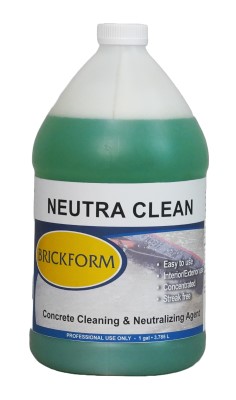
- Use Brickform Neutra Clean at 4 oz per gallon of water.
- Scrub thoroughly with a medium-bristle floor scrubber to lift residue.
- Rinse with clean water multiple times until no residue remains.
“Rinse it, scrub it, neutralize it, and scrub the heck out of the residue because it’s going to build up a salty residue that’s got to be removed prior to sealing.”
–John Reynolds
Don’t expect uniform results.
Acid stain creates a translucent, variegated appearance with natural color movement and variation. Unlike paint, it doesn’t provide solid, even coverage. The charm of acid staining lies in its unpredictability. Embracing those subtle shifts in tone and texture is what gives the concrete surface its unique, organic character.
See More