11 Tips for Pouring Concrete in Hot Weather
How to successfully pour a high-quality slab, even when the weather is hot and dry.

In a perfect world, you’d always be able to wait for the ideal weather conditions to pour concrete. But every contractor knows schedules get tight, and when summer temperatures soar, sometimes you have to pour anyway. Pouring concrete in hot weather can make it difficult to achieve a smooth, durable concrete surface.
Fortunately, if you plan ahead you can still pour a solid slab when the summer heat hits. Here’s what hot summer weather does to fresh concrete and the simple tweaks that keep your pour on track.
What temperature is too hot to pour concrete?
When the thermometer pushes past 85 °F the game changes, but it’s not a deal-breaker. You can still pour if you adjust your plan. Even at 80 °F, intense sun, low humidity, or a strong breeze can dry the surface fast, so prep accordingly.
Does concrete cure faster in hot weather?
Hot weather cranks up curing time, and that spells trouble for summertime concrete projects. Rapid moisture loss can leave your slab with a handful of headaches, including:
- Increased rate of setting. High temperatures speed up the dehydration process, so concrete drys and hardens faster than you can work with it.
- Shrinkage. When heat pulls moisture out too fast and the setting time is quicker than it should be, plastic shrinkage cracks can form.
- Slump loss. Slump loss refers to the reduced workability of the concrete that occurs when there’s excessive evaporation or heat. You’ll know you’re experiencing slump loss when it’s difficult to spread or smooth out the concrete.
Let these problems go unchecked and the final product could have blotchy color, surface cracks, spalling, and other defects.
Tips for Pouring Concrete In Hot Weather
The best thing you can do is keep an eye on the forecast. But, short of pushing your job to a cooler day, here’s how you keep heat from wrecking your concrete pour.
- Schedule your pour for early in the day. If possible, pour at first light. Beginning the concrete installation process well before the heat sets in keeps the slab cooler and gives you more finish time.
- Include admixtures such as superplasticizers or set retarders. Use the right admixtures to stay in control. Add a superplasticizer near the end of mixing to hold the slump where you want it. Dose a set retarder at the plant or on site, depending on haul time.
- Discuss other ways to combat the heat with your ready-mix supplier. One additional solution is to use chilled water.
- Minimize heat rising in the mixer drum which results in a hotter concrete mix. You can do this by ordering concrete from a nearby ready-mix supplier to keep mixing time low.
- Set up shade and windbreaks over the placement area. Throw up shade and windbreaks. The air might still be hot, but you’ll keep concrete temperature lower and shield the slab from the drying wind.
- Have plenty of finishers on site. Having lots of hands on deck, ready to finish the concrete before it sets is important when you’re dealing with high temperatures.
- Premoisten the subgrade, forms, and rebar. This crucial step keeps everything cooler longer. Just make sure to distribute water evenly and avoid puddles.
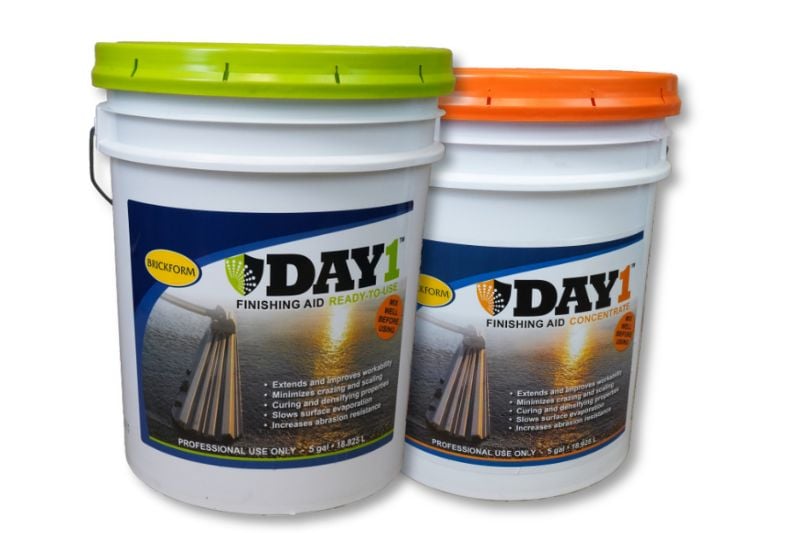
- Use a finishing aid such as Brickform’s DAY1. “DAY1 can flat-out save a slab when the surface starts closing up too fast,” says John Reynolds, Technical Expert at Brickform. It’s easy to use: Just spray it on during floating and troweling, and again as needed throughout the finishing process. DAY1 reduces surface evaporation, so it’ll extend the time you have to work before the concrete sets.
- Tool control joints early instead of relying on saw cuts. Tool joints while the concrete is still plastic. Early hand tooling beats saw cuts in hot weather and helps you avoid edge raveling or random cracks.
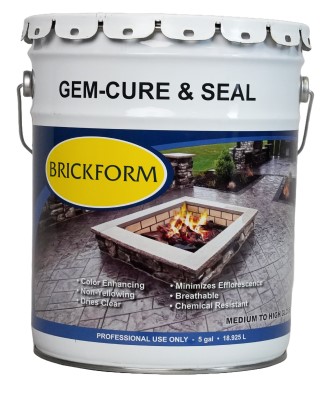
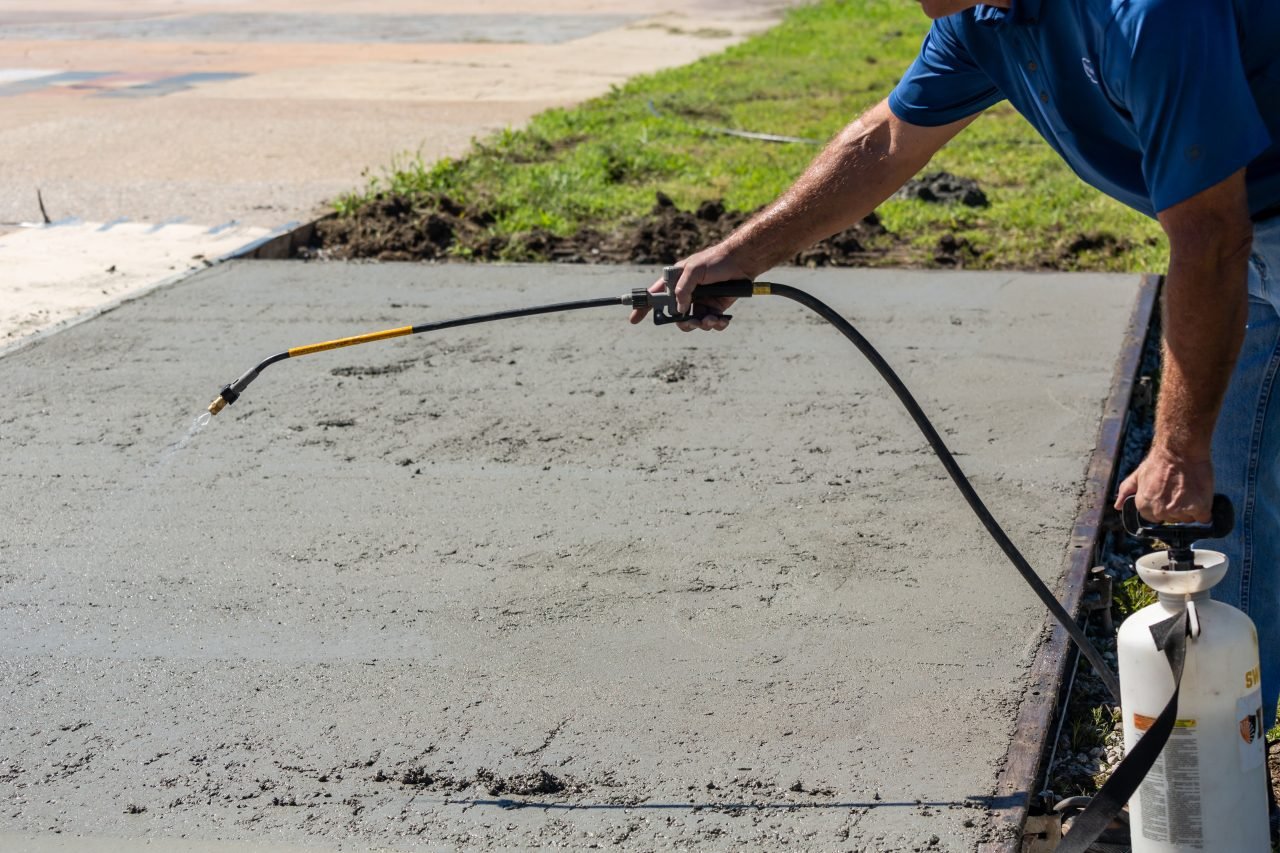
- Apply a membrane-forming curing compound. DAY1 doesn’t leave a film. You should still consider a curing compound to seal in moisture and build strength. Grab a pump-up sprayer and fog on a light coat of Gem Cure & Seal as soon as all the bleed water has evaporated and you can walk on the surface without marring it. .
- Protect the fresh slab and keep all traffic off for the first 24 hours. Keep forms on, and rope off the area so the surface isn’t disturbed during the initial curing process.
Jobsite Tips for Contractor Safety
Always protect the crew as much as the slab. Heat without shade or water can tip you into heat exhaustion or heat stroke. Dehydration slows your reflexes and clouds judgment, and that’s when job-site accidents happen. Use these steps to stay cool and safe:
- Hydrate. Drink water regularly, even if you don’t feel thirsty.
- Dress for the weather. Opt for lightweight, light-colored shirts with UPF sun protection that wick sweat. Hats are a must, and a cooling neck wrap is a great addition.
- Take breaks. If performing a strenuous task, be sure to stop for breaks and even rotate with other crew members if possible.
- Avoid strenuous activities during the hottest times of day. Typically, anywhere between 1pm and 4pm is the hottest part of the day. Try to get work done before the afternoon when the heat picks up.
- Bring cooling supplies. Fans, buckets of ice, misters, cooling vests, and cooling neck wraps are all helpful tools for working at jobsites on especially hot days.