How to Change Concrete Color (The Ultimate Guide)
Learn how to change the color of concrete using several different products and techniques.

Here’s a question we get often: Can you change the color of concrete?
Yes, you can. Whether you want to fix discolored concrete, recolor stamped concrete, or give a concrete slab a refresh with a new color, it can be done. Here, we cover the top three ways to change the color of existing concrete so you can decide how to best approach your coloring project.
✉ Get Expert Tips Straight to Your Inbox!
Sign up for our newsletter for exclusive tips, techniques, and updates.
GOOD: USE A TINTED SEALER
Tinted sealers offer a versatile solution for changing concrete color. Consider this option if you’re looking to:
- Correct integrally colored concrete.
- Add color to a gray concrete slab on a tight budget.
- Correct concrete color that appears bleached or uneven if it rains during a concrete pour.
“Tinted sealers are an excellent solution for contractors and DIY enthusiasts looking to enhance or modify concrete color without breaking the bank,” says John Reynolds, Technical Director at Brickform. “They’re particularly effective for correcting minor color inconsistencies or adding a uniform color with a wet look (or glossy) to existing concrete. The key is proper application and selecting the right product for your specific needs.”
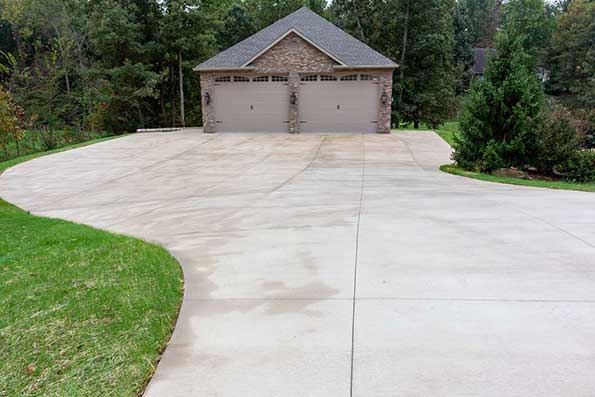
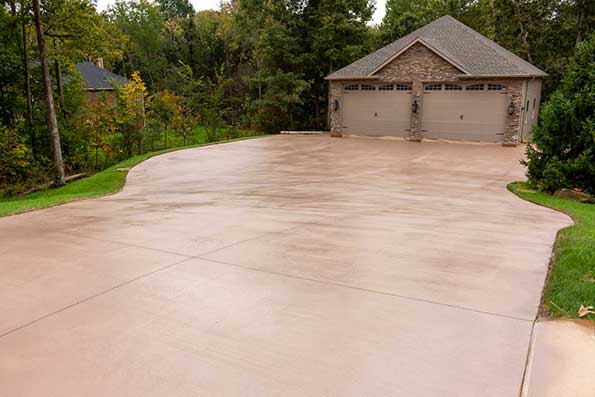
Tinted sealers come in various forms, including pre-tinted options and tint packs that can be mixed with clear sealers. For instance, Brickform Tinta’ Seal provides a range of 42 colors that can be mixed into solvent-based sealers. This allows you to find a shade that complements any style, from neutral to earthy to vibrant.
When choosing a tinted sealer, consider factors such as:
- Color range and customization options
- Compatibility with your existing concrete surface
- Durability and UV resistance
- Application method and ease of use
While tinted sealers are effective, they do have limitations. They may require periodic reapplication as they wear, can make surfaces slippery when wet, and offer fewer color options than other methods. They’re also less suitable for heavily damaged concrete. However, for many projects, the benefits of tinted sealers often outweigh these drawbacks.
To learn more about selecting and applying tinted sealers effectively, check out our guide on how to use tinted sealer.
BETTER: USE A PENETRATING STAIN
Penetrating stains offer a more permanent solution for changing concrete color, allowing you to achieve a natural look while addressing various color issues. This option is particularly effective when you need to:
- Blend multiple pours of integrally colored concrete
- Correct concrete discoloration on an existing surface
- Even out light and dark spots
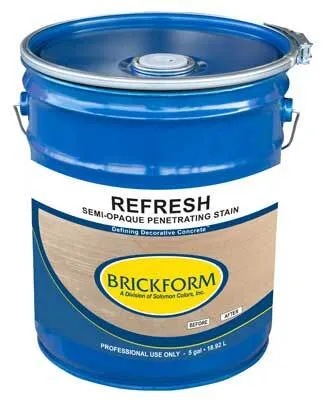
Penetrating stains work by entering into the pores of the concrete rather then sitting on top like traditional film-forming sealers. For example, Brickform Refresh is a solvent-based, semi-opaque stain designed for resolving surface discoloration issues. It can be applied to unsealed, porous concrete and masonry surfaces, offering a natural-looking color in a wide variety of shades.

“Refresh has been a game-changer for many of our clients,” says Reynolds. “It corrects and blends color inconsistencies while letting the natural concrete texture show through. We’ve seen great results in both residential and commercial projects (like this transit station in Atlanta). The key is proper surface prep and understanding its ideal applications.”
When using a penetrating stain, consider these tips:
- Ensure the surface is properly prepared and clean before application
- Test the stain on a small, inconspicuous area first
- Apply in thin, even coats for best results
- Seal for added protection and color enhancement using Gem-Seal or Poly-Seal
While Refresh offers many benefits, it has some limitations. It won’t hide surface texture variations, blemishes, or differences in concrete porosity. Application requires completely dry surfaces, and it may not work well on polymer-modified overlays or extremely dense concrete. For best results, use only spray-compatible sealers. Despite these constraints, Refresh remains effective for many concrete coloring projects when used appropriately.
BEST: USE A CEMENTITIOUS COATING
Cementitious coatings offer a versatile and durable solution for dramatically changing concrete color and appearance. This option is ideal when you need to:
- Rejuvenate old, outdated concrete with a high-strength layer
- Create a durable architectural coating on top of a newly poured surface
- Achieve a uniform color across diverse concrete surfaces


“Cementitious coatings like Cem-Coat® Plus are the go-to solution for complete concrete makeovers,” says Reynolds. “They give you so many options for color, allowing worn-out surfaces to be transformed into beautiful, long-lasting finishes.”
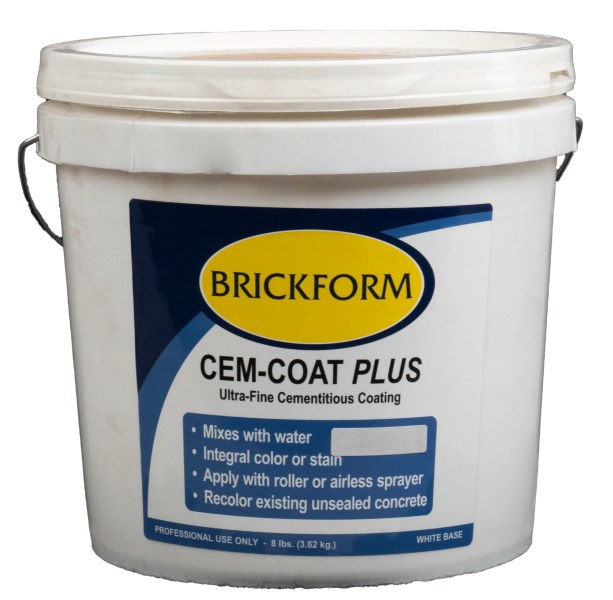
Brickform’s Cem-Coat® Plus, for example, provides a UV-resistant, cement-based layer that can be integrally colored or tinted after curing. This flexibility allows for a wide range of color options and finishes. You can even use stains or antiquing agents on cured Cem-Coat® Plus to create unique effects.
When considering a cementitious coating, keep in mind:
- Proper surface preparation is crucial for adhesion
- Application thickness can affect the final appearance
- Weather conditions during application can impact the result
- May require periodic maintenance to preserve appearance
While cementitious coatings offer excellent durability and versatility, they do not cover surface imperfections, so any cracks or chips in the existing concrete must be repaired first, as they will show through the coating. Additionally, the application process can be more involved compared to other coloring methods, potentially requiring professional installation for best results.
To learn more about selecting and applying cementitious coatings effectively, check out our guide on how to use Cem-Coat® Plus.
FREQUENTLY ASKED QUESTIONS
Can I change the color of my stamped concrete?
If you have damaged stamped concrete or the color of your stamped concrete has faded, you don’t have to tear it all out to update your surface. Instead, you can take any of the approaches explained above to update the color of your stamped concrete.
Can concrete be colored after it’s cured?
Yes. All three coloring options listed above (tinted sealer, penetrating stain, and cementitious coatings), can be completed after concrete has already cured. Before applying sealer, stain, or a coating, you’ll need to properly prepare the surface according to manufacturer’s instructions.
What is the easiest way to color concrete?
More important than what is the easiest way to color your concrete is figuring out which one is appropriate for your concrete slab.
- If you need to color-correct or color a large slab of gray concrete, a Tinta’ Seal is the best option.
- If you need to blend two slightly different colors of concrete, you’ll want to use Refresh.
- If you need to cover color defects on a slab of concrete or are looking to provide a unique stained or antiqued appearance, Cem-Coat® Plus is best.
Can existing concrete be colored?
Yes, all three options for coloring explained in this article (tinted sealer, penetrating stain, and a cementitious coating) can be used on existing concrete.
What about coloring new concrete?
New concrete is the ideal time to add integral color, which is blended into the mix before the concrete is poured. This approach delivers rich, consistent color throughout the entire slab. For more information on how to achieve long-lasting, vibrant colored concrete, explore the options available from Solomon Colors—Brickform’s parent company and a leader in concrete pigmentation.

Project Spotlight
This brand new stamped concrete driveway in Utah had some serious discoloration issues. Cem-Coat and Antique-It were used to give it the look it should have had from day one.
MDRN Concrete Specialties
COMMON ISSUES & HOW TO RESOLVE THEM
How to fix blotchy colored concrete: If your concrete is blotchy, using Brickform’s Refresh is your best, most cost-effective option. This solvent-based stain is often used to blend uneven color, giving the color on the entire slab a cohesive look.
How to lighten concrete: If you want a lighter color for a concrete slab, the approach you take depends on how the concrete slab was colored in the first place.
- If the concrete is integrally colored, the best and most straightforward solution is to apply a cementitious coating. In addition to being able to customize the surface with the desired color, you’ll reinforce the surface strength.
- If the concrete was previously stained or painted, you can remove the unwanted color layer using a product such as Brickform’s Strip-It (depending on the sealer) or sandblasting. After removing the darker color, you can apply a new color using tinted sealer or a penetrating stain.
“Lightening concrete is always difficult and CemCoat is probably the best option because its opaque. If you want a glossy look, Tinta’ Seal will also lighten it. Refresh will not. Refresh is more used to darken slabs,” adds Reynolds.
How to darken concrete: If you want a darker color for a concrete slab, you can do one of the following:
- Apply a cementitious coating in the desired color.
- Apply a tinted sealer that provides the darker color that’s been requested.
- Apply a penetrating stain in the darker color.
Want more from Brickform? Subscribe to our newsletter for our latest blog posts, videos, training dates and more!
See More