• 1 gal, 5 gal, 55 gal.
  • 250 to 350 ft2 per gal.
  • Wet look
  • Medium to high gloss
  • Non-yellowing
  • Dries clear
  • Resists stains
Related sprayers:
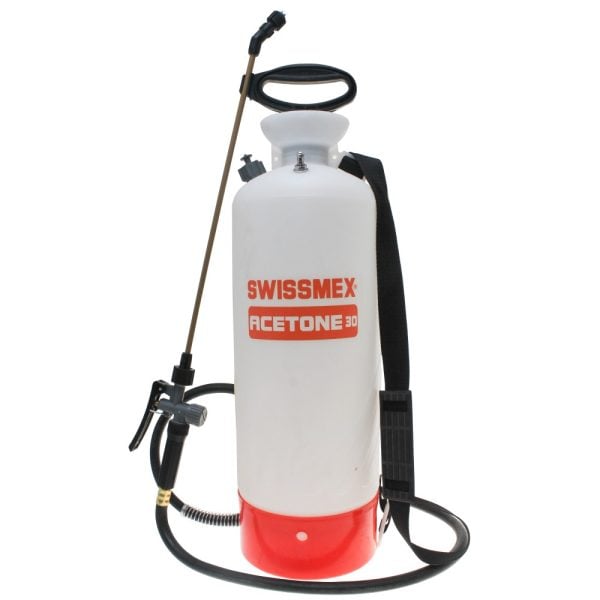
  • Acetone Sprayer – For Gem-Seal 100 and 350 VOC
  • Solvent Sprayer – For Gem-Seal 700 VOC

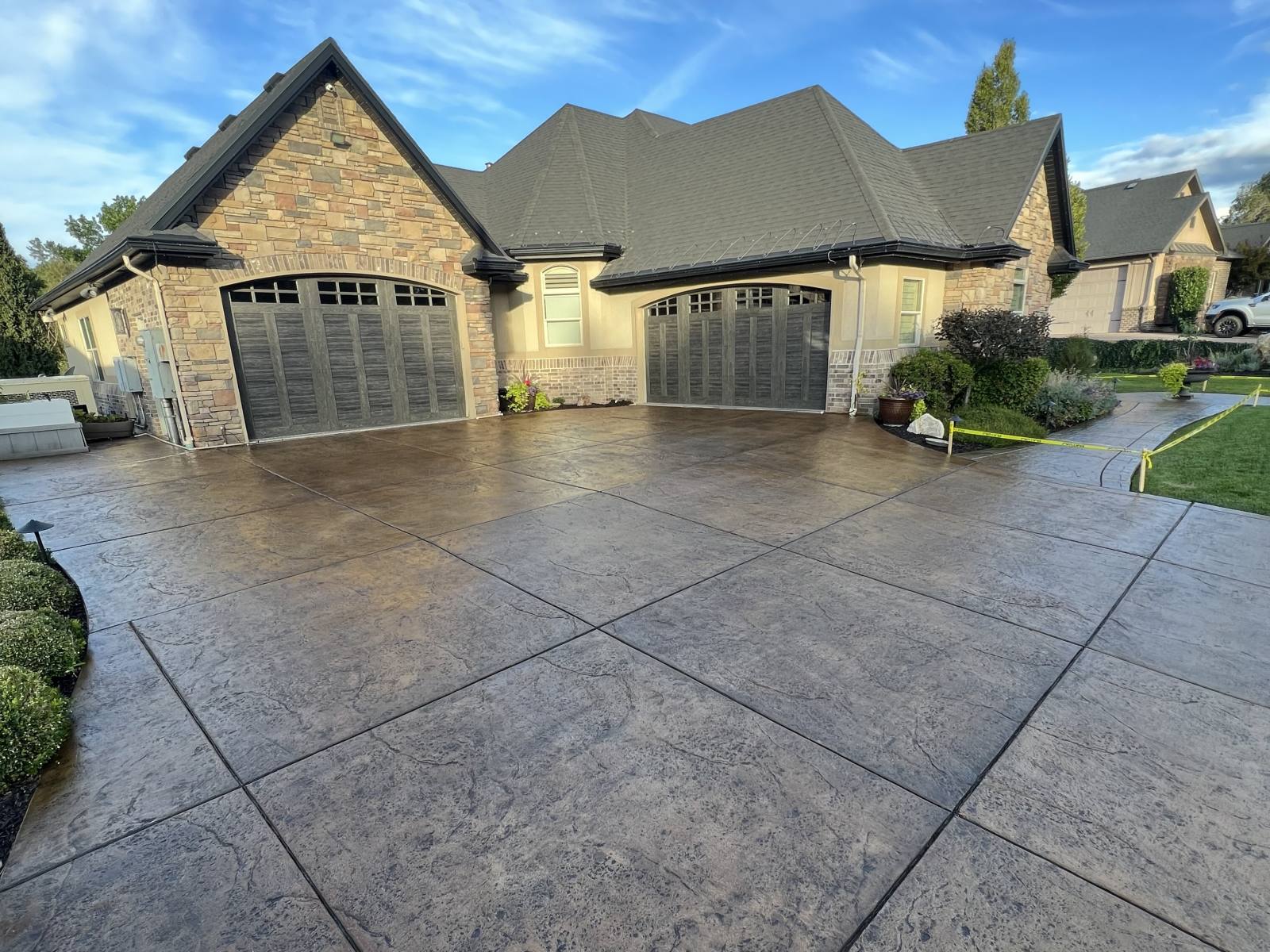
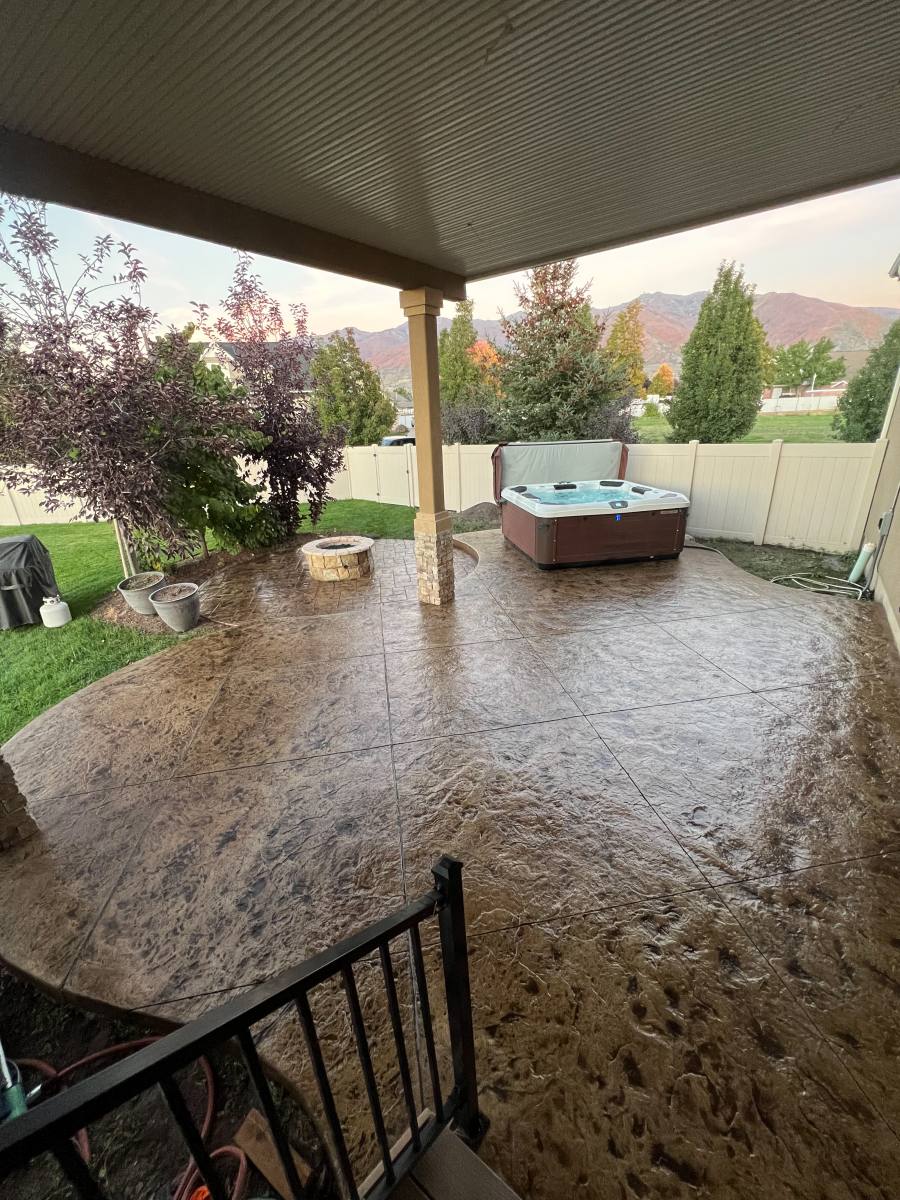
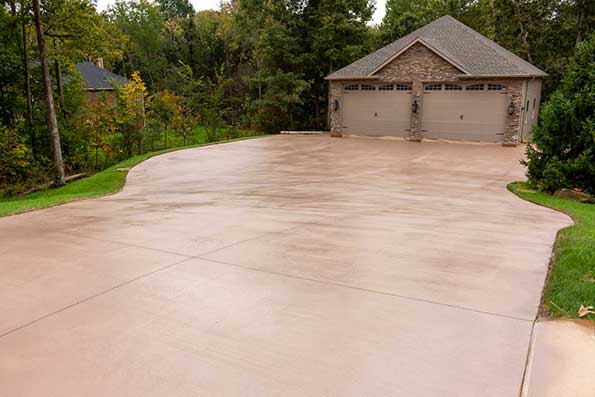
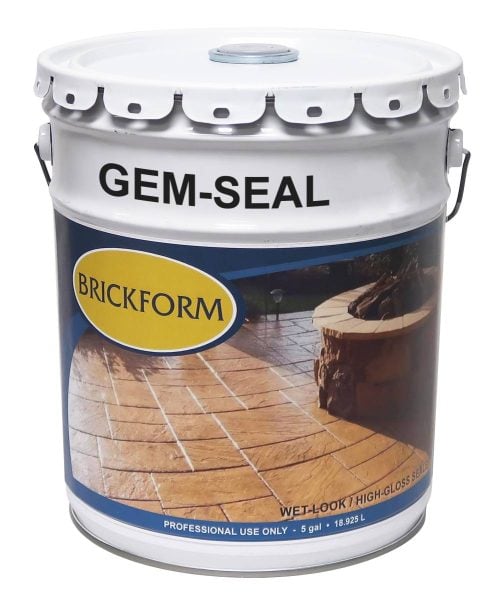
Gem-Seal is the best sealer for stamped concrete because it enhances color and adds a rich gloss. Use it on driveways, patios and walkways to make the color and texture pop. See it in action on these projects:

Which version is right for your job?
  • Gem-Seal 100 VOC: Required in California, Colorado, Utah, and other restricted markets. The solvent kicks off faster at this VOC level, so apply early in the day and keep your coats thin.
  • Gem-Seal 350 VOC: The right call for most markets without strict VOC limits. More forgiving application window than the 100. Currently replacing the 400 VOC formulation, check with your distributor on availability.
  • Gem-Seal 700 VOC: For low-restriction markets in the Midwest, Southeast, and South. Longest working time of the three.

Not sure which VOC limit applies in your market? Check the VOC map.

Tips for a callback-free application:
  • Apply early in the morning. A hot, sun-warmed slab causes bubbling.
  • The slab needs to be fully cured before sealing, generally 28 days minimum.
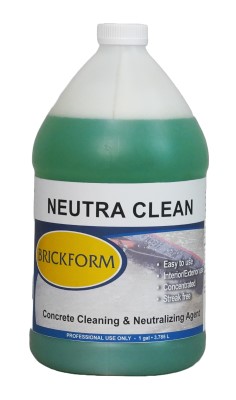
  • Neutralize after any acid prep or staining. Sealer needs a surface pH of 7 to 8.
  • Two or three thin coats outperform one heavy coat.
  • Keep coverage at 250 to 350 sq ft per gallon and maintain a wet edge.
  • Back-roll any excess material with a nap roller before it dries.
  • Keep foot traffic off for 24 hours minimum. Heavy traffic, 72 hours.

Did You Know? Pairing Gem-Seal with Antique-It is one of the best ways to restore faded or dull stamped concrete. The antiquing agent brings color back into the texture, while Gem-Seal seals the color and restores the gloss.

Gem-Seal Application Tips Video

Bubbling sealer is a common issue that come up in stamped concrete and decorative concrete applications. Sealer bubbles are unattractive and can lead to call backs and bad reviews. Sealer bubbles do not mean the product is defective or there is anything wrong with the concrete. In most cases, the sealer was just applied in too thick of a coat.

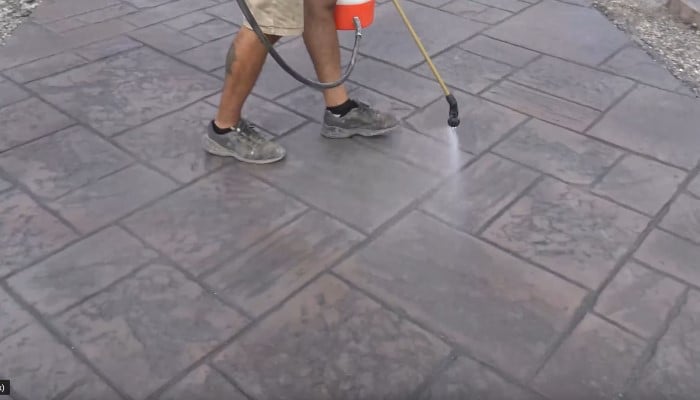
In this video, we demonstrate how to avoid sealer bubbles in high heat. With a surface temperature over 100 degrees Fahrenheit and an ambient temperature typical of a hot summer day, we apply Brickform Gem-Seal in thin coats using the Brickform Precision Tip. By using this method, sealer bubbles were successfully avoided. Earlier, under the same conditions, the sealer was applied heavily and experienced a high degree of bubbling.

gem seal application tips