How to Clean Concrete Driveways, Patios, and More
Your guide to removing stains, maintaining decorative finishes, and keeping concrete looking its best.

Concrete is tough. It takes a beating from traffic, weather, and years of use. But even durable surfaces need regular cleaning to stay looking good. Oil stains, dirt buildup, efflorescence, and mildew all add up.
This guide covers how to clean and maintain concrete surfaces of all types. From driveways and patios to decorative finishes and more, we’ll walk through basic upkeep, deep cleaning methods and long-term protection. Plus we’ll share Brickform product recommendations for each step.
Basic Cleaning Process
What you’ll need
Before you start, gather what you need for your specific job:
- PPE: Gloves, waterproof boots, eye protection
- Cleaning tools: Brushes, mops, buckets, squeegees
- Equipment: Pressure washer, hose, spray nozzle, pressurized sprayer
- Products: Cleaners, degreasers, sealers
Step-by-step overview
Different concrete surfaces face different challenges, but the basic approach is similar:
- Start with a good sweep or blow-off to remove loose debris.
- For outdoor surfaces, pressure washing handles general dirt and grime. For indoor surfaces, stick to mopping.
- For tougher stains, organic buildup, or oil, you’ll need a cleaner matched to the problem.
- Always rinse thoroughly after cleaning, and let the surface dry completely before sealing.
The lowdown on pressure washing
Pressure washing is one of the most effective ways to clean outdoor concrete, but it needs to be done right. There’s a big difference between cleaning the surface and prepping it for a coating. The key is matching your nozzle and technique to the job.
For routine cleaning: Use a 40-degree white tip for general cleaning on most surfaces. It removes dirt and grime without damaging the concrete. A 25-degree green tip works well for basic or broom-finished concrete like driveways and back patios that can handle a bit more pressure. Keep the nozzle moving in even, overlapping passes.
For decorative surfaces: Stick with the 40-degree tip and keep your distance. Never use a 15-degree yellow tip on stamped concrete, stained surfaces, or exposed aggregate, it will damage the finish.
For surface prep or sealer removal: A 15-degree tip, turbo tips, or floor buffers with spinning heads are good for deep cleaning old concrete and removing worn sealer. These are aggressive methods meant for prep work, not routine cleaning. They will etch and damage decorative finishes. Learn more about surface preparation.
Always test a small area first, especially on decorative concrete. If you see surface damage, etching, or pressure washing lines, you’re too close or using too much pressure.
Pro tip: Rotary power washing attachments distribute pressure more evenly and are less likely to cause damage than standard wands. Rent one at your local equipment supply store.
Cleaning Different Concrete Surfaces
Not all concrete is created equal. The challenges vary, but knowing what each surface needs makes the job easier. Here’s a quick rundown:
| SURFACE | COMMON ISSUES | BEST CLEANING METHOD | CLEANERS | SEALERS |
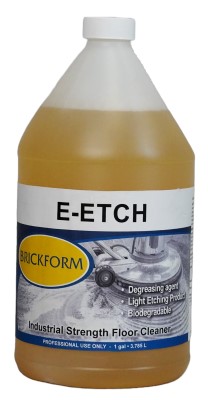
| Driveway | Oil drips, tire marks, and efflorescence | Pressure washing | E-Etch | Stealth-Seal |
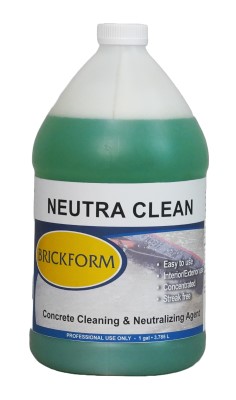
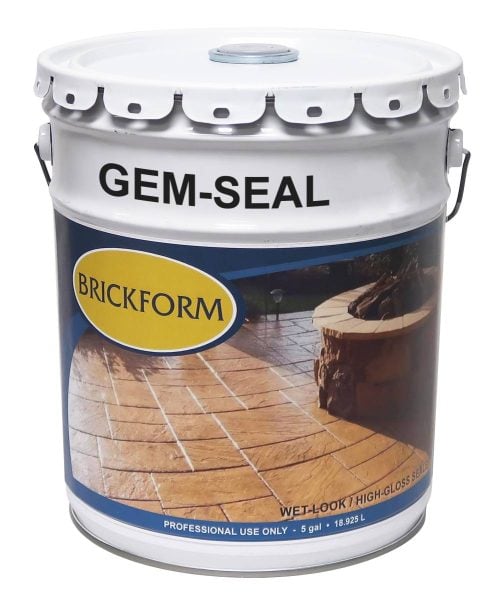
| Patio | Mold, mildew, algae, and leaf stains | Pressure washing | Neutra Clean | Gem-Seal |
| Porch | General dirt and stains on decorative finishes | Pressure washing | Neutra Clean | Safety-Seal |
| Garage Floor | Oil, grease, antifreeze, and road salt | Scrubbing with a stiff brush | E-Etch | UreMax or DecoPoxy |
| Interior Floor | Dust, spills, and scuffs | Regular sweeping or vacuuming, mopping as needed | Neutra Clean | Acrylic Floor Finish |
Cleaning Specific Concrete Finishes
Some finishes need special care. Decorative concrete may need gentler cleaning methods and specific products to preserve color and texture. Here’s how to handle the most common types.

How to clean broom-finished concrete
Broom-finished concrete provides slip resistance but also traps dirt in the grooves. Fortunately, it’s one of the most durable finishes and can handle more aggressive cleaning.
- Pressure wash using a 40-degree tip. Try a 25-degree tip for added power.
- For stubborn stains like oil or efflorescence, use E-Etch.
- Use a stiff brush to work cleaner into the grooves.
- Rinse thoroughly after cleaning.
If needed, seal with Stealth-Seal which protects without changing the appearance. It’s completely invisible and keeps the natural slip-resistant texture.

How to clean stamped concrete
Stamped concrete has texture and joints that trap dirt. For routine cleaning, stick with mild detergents and soft brushes. Avoid harsh chemicals or strong acids.
- Stick with a 40-degree tip to avoid damaging the texture when pressure washing.
- A pH-neutral cleaner like Neutra Clean works well for routine cleaning.
- A mild acid-based cleaner like E-Etch breaks down efflorescence or oil stains.
- Reseal with Gem-Seal to restore protection and color.
“For deep cleaning on textured surfaces like stamped or broom-finished concrete, use a rotary floor scrubber with a nylon bristle brush attachment. It scrubs well without wearing down the texture.”
— John Reynolds, Brickform Technical Specialist
How to clean stained concrete
Stained concrete comes in different forms. Acid stains, water-based stains, and dyes all act differently. But they all should be sealed to bring out the colors and provide protection. The cleaning tips here apply to properly sealed stained concrete. The safest approach is to use pH-neutral products to avoid altering or fading the color.
- Outdoors, stick with a 40-degree tip for pressure washing to preserve color.
- Use Neutra Clean for regular maintenance. It won’t interfere with the stain or strip the sealer.
- If you need to remove an old sealer, Strip-It handles that without damaging the underlying stain.
- Protect with Gem-Cure & Seal for added color enhancement.
- Indoors, apply a coat of Acrylic Floor Finish as a sacrificial coating over the sealer.
“This can also be used as a pH-neutral cleaner for concrete… if you want to clean your concrete every month or every six months or once a year, this is a great product to use because it won’t harm anything.”
— John Reynolds
How to clean exposed aggregate
Exposed aggregate has a textured surface that collects dirt, leaves, and debris. The biggest concern is pop-out, where stones can dislodge from pressure washing or scrubbing too hard. Before cleaning your entire patio or pool deck, test a small area first.
Rinse regularly with a hose and scrub gently to deal with any buildup. Don’t use a wire brush or anything too abrasive.
- Light power washing is fine if sealed. Go with a 40-degree tip.
- Apply E-Etch to break down contaminants and agitate with a broom.
- Then use Neutra Clean and rinse thoroughly.
- Once it’s clean and dry, seal with Gem-Guard to protect and enhance the natural look of the stone.
- Only use Strip-It to remove old sealer or buildup if needed.
⭐ Pro Tips for Using Neutra Clean
Use Neutra Clean for routine cleaning or as a follow-up rinse after stronger cleaners. It’s safe for colored, stamped, and stained concrete.
Here’s what you need to know:
“Let Neutra Clean dwell for one to two minutes before scrubbing. Rinse with clean water and remove the residue with a vacuum or pressure washer. Use four ounces of Neutra Clean per gallon of water to get 150 to 200 square feet of coverage.”
John Reynolds
This gives it time to loosen dirt and residue, prevents streaks, and ensures proper dilution so the cleaner works as intended without leaving a film.
Removing Specific Stains from Concrete
Some stains need targeted treatment. Here’s how to tackle the most common ones.
How to remove oil stains
For fresh oil spills, try cat litter, baking soda, or dish soap. Sprinkle it on the stain, let it sit, then scrub and rinse with hot water.
If that doesn’t work or the stain has set in, use E-Etch or a concrete degreaser. Apply it to the stain, let it soak in for several minutes, scrub with a stiff brush, and rinse. Deep stains may need multiple applications.
How to remove rust stains
Rust stains show up as orange or brown spots, sometimes in the shape of the item that left them. Think rings left by planters or furniture legs, or streaks left by metal tools.
For light stains, try lemon juice or white vinegar. Apply it, let it sit for an hour, scrub, and rinse.
If that doesn’t cut it, use an acid-based cleaner like E-Etch. The phosphoric acid reacts with rust and lifts it from the concrete. Apply, let it sit, scrub gently, and rinse. Test in a small area first on decorative concrete.
How to remove leaf stains
Leaves release tannins that stain concrete brown or black, especially when they sit wet on the surface for a while. Start by scrubbing with warm water and dish soap using a stiff brush.
If that doesn’t work, use a pH-neutral cleaner like Neutra Clean. Apply it, let it sit for 10-15 minutes, scrub, and rinse. You may need to repeat for stubborn stains.
⭐ Pro Tips for Using E-Etch
Use E-Etch only when tough stains won’t come up. It is especially good for efflorescence, mineral buildup, or stubborn oil stains.
Here’s some advice:
“Always pre-wet the slab but don’t allow any ponding or puddled water when applying the product. Allow it to soak into the surface for 2 to 3 minutes—10 to 15 minutes for heavily soiled areas. Do not allow E-Etch to dry on the surface.”
John Reynolds
This approach keeps E-Etch from reacting too aggressively, gives it time to break down buildup without over-etching, and prevents residue.
Protect Your Clean Concrete with Sealer
Cleaning gets your concrete looking good again. Sealing keeps it that way. A quality sealer locks in that fresh look and makes maintenance easier down the road.
📢 Did You Know?
Not all sealers perform the same. The options at big box stores are convenient, but they don’t offer the same protection or longevity as professional-grade products. Find one at a Brickform dealer near you.
Sealing prevents stains from soaking into the concrete. Oil, dirt, and organic material stay on the surface, so cleaning takes less effort. Sealer also protects against water damage, efflorescence, and UV fading. And it can enhance the color or add a glossy finish that brings out the character of decorative concrete.
Pro tip: Before resealing, find out if there’s already a sealer there. Sprinkle a little water on the surface, if it beads up, it’s sealed. If it absorbs quickly, the sealer is worn or gone. You can also test with a small amount of muriatic acid in an inconspicuous spot. If it fizzes or reacts, there’s no sealer. If you’re unsure, have a professional out to do the sealing.
If your concrete is sealed, check its condition before reapplying. If the sealer is still in good shape, you can clean and add a fresh layer right over it. Be sure to use the same product.

If you don’t know what sealer was used or if the concrete has cloudy, peeling, or worn sealer, you’ll need to strip it off. Use Strip-It to remove the old layer. If the sealer is almost completely gone in spots, you can strip just those areas instead of the entire surface. Then open up the pores with E-Etch and clean the surface thoroughly with Neutra Clean before applying fresh sealer.
For most concrete, resealing every 2-3 years is a good schedule. High-traffic areas like driveways or garage floors may need it more often. Use Gem-Seal for a high-gloss finish or Stealth-Seal for a breathable, water-based option that’s totally invisible. Apply with a Swissmex sprayer for even coverage and professional-looking results.
For interior floors, consider applying Acrylic Floor Finish over the sealer. It adds an extra layer of protection and helps the sealer last longer.

FAQs
What’s the best cleaner for concrete?
It depends on what you’re cleaning. For general maintenance and organic stains, use a pH-neutral cleaner like Neutra Clean. For oil, grease, and efflorescence, an acid-based cleaner like E-Etch works better.
Can I use acid to clean concrete?
Yes, but use the right kind. Muriatic acid is harsh and can damage concrete if you’re not careful. E-Etch is a safer, biodegradable phosphoric acid cleaner that’s effective without the risk.
“E-Etch is a heavy-duty cleaner plus it’s got a light etching material in it. It’s sort of an acidic product but it’s much more environmentally friendly than hydrochloric acid.”
— John Reynolds
Can I pressure wash all types of concrete?
Most concrete can handle pressure washing, but decorative finishes like stamped concrete, exposed aggregate, and stained surfaces need a gentler approach. Use a wide-angle nozzle, keep your distance, and test a small area first.
How often should I clean my concrete driveway/patio?
For routine maintenance, sweep or rinse every few weeks to prevent buildup. Deep clean once or twice a year, or whenever stains appear. High-traffic areas may need more frequent cleaning.
Can I use bleach to clean concrete?
Bleach can lighten stains and kill mold, but it’s not ideal for concrete. It can damage sealers, harm nearby plants, and doesn’t address oil or grease. Stick with cleaners designed for concrete.
Do I need to neutralize acid cleaners after use?
Strong acids like muriatic acid need neutralization. Modern acid cleaners like E-Etch are formulated to rinse clean with water, but we always recommend neutralizing anyway. Acid changes the pH of the concrete, which can interfere with sealer bonding. If you’re cleaning with E-Etch before sealing, neutralize the slab with Neutra Clean, then rinse thoroughly. This gives the sealer the best chance of bonding properly.
See More