Restaurant Patio Makeover: Old Spaghetti Factory Gets a Lasting Fix
How MDRN Concrete Specialties used Cem-Coat Plus to turn a worn commercial patio into a durable, restaurant-ready finish
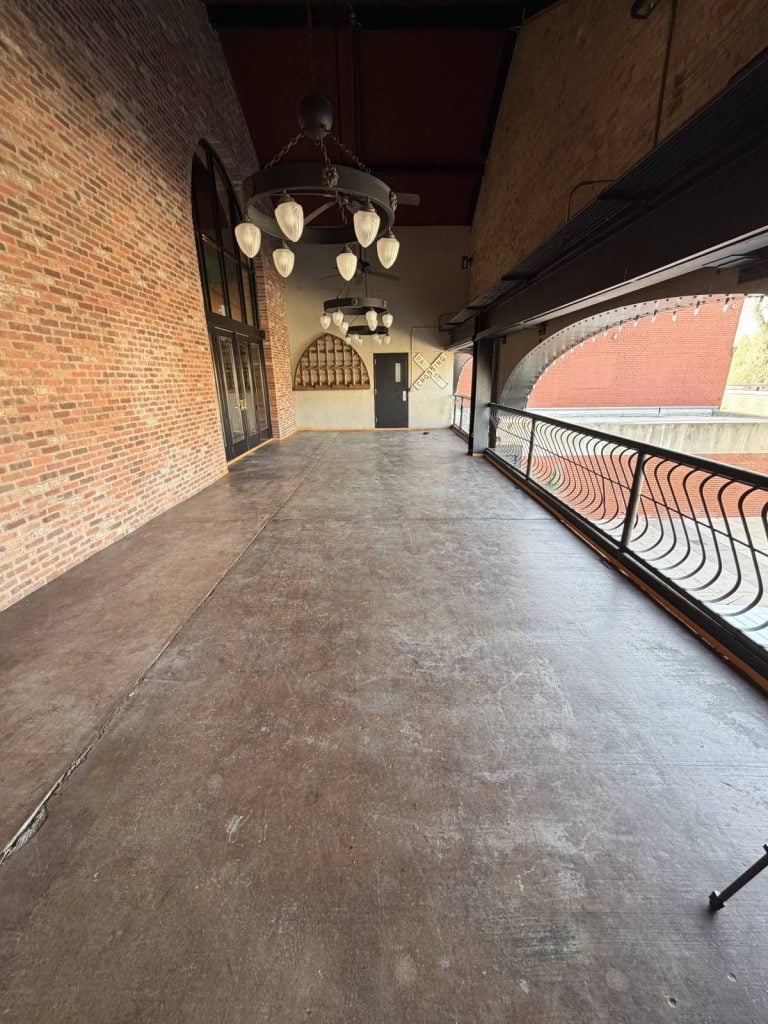
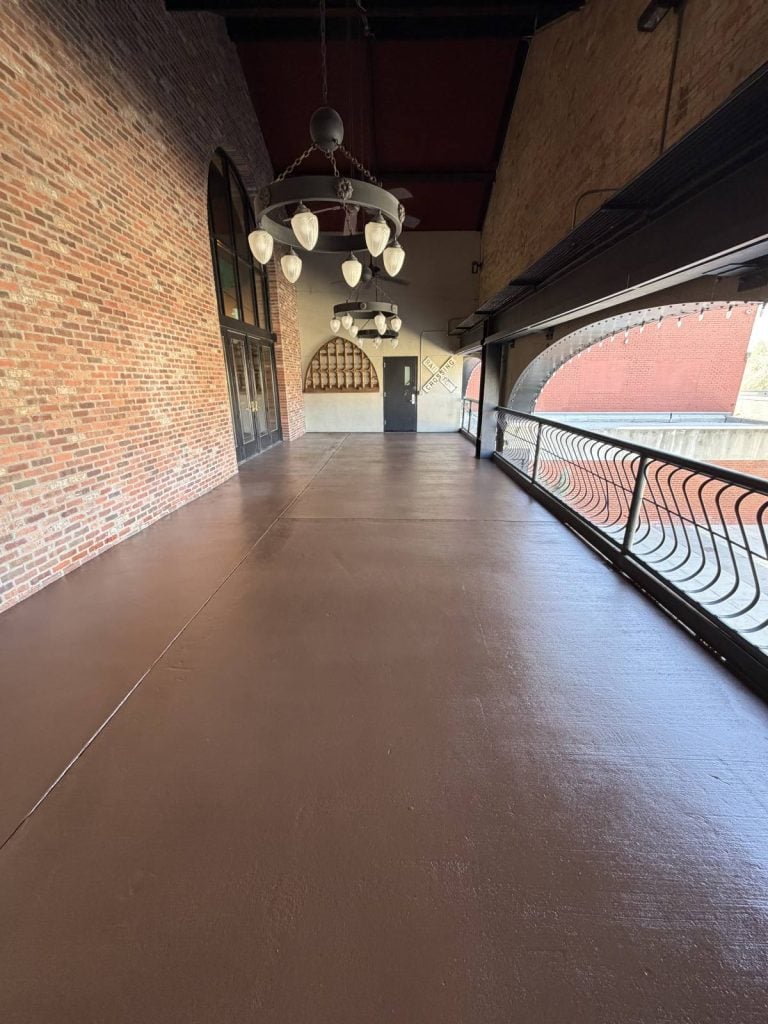
When a high-traffic restaurant patio starts looking rough, it’s not just an eyesore. It reflects on the whole operation. That’s the situation the Old Spaghetti Factory found themselves in: failed sealer, a decorative stain well past its useful life, and a blotchy, faded surface that didn’t match the quality of what was happening inside.
They needed a fix that would actually last. MDRN Concrete Specialties delivered one.
Project Details
- Project Type: Commercial patio restoration
- Location: Salt Lake City, Utah
- Contractor: MDRN Concrete Specialties
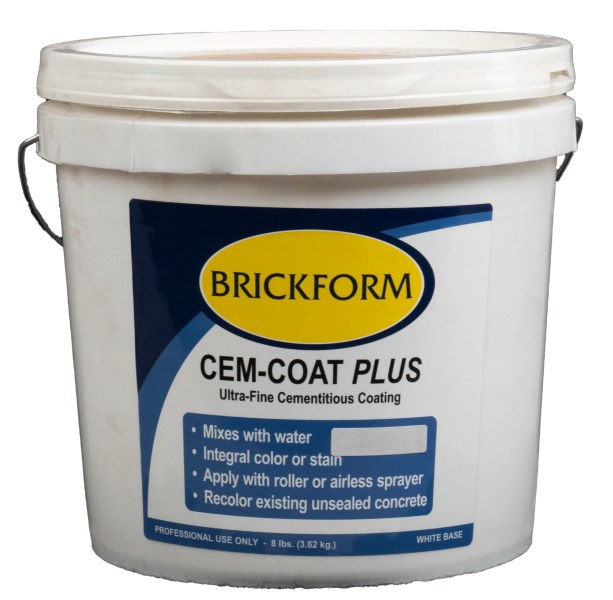
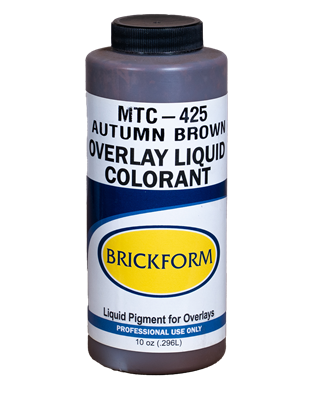
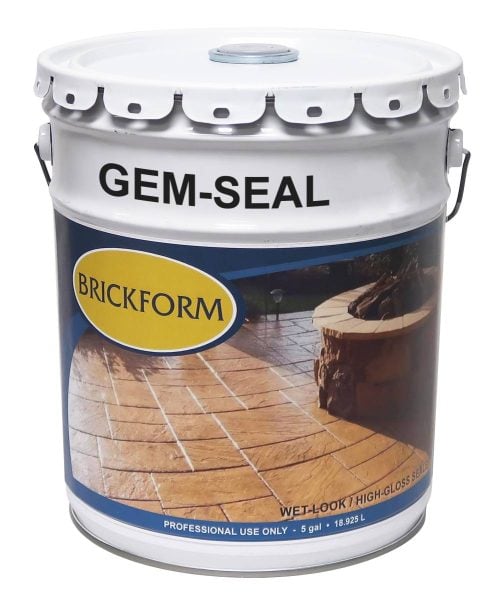
- Brickform products: Cem-Coat Plus, MTC Liquid Colorant, Gem-Seal 100
Why Paint, Stain & Tinted Sealers Weren’t the Answer
A lot of people look at an ugly patio and reach for paint. It’s cheap, it’s fast, and it looks fine for about one season. Then it starts peeling, chipping, and breaking down under constant foot traffic, table and chair movement, and food and drink spills.
Cem-Coat Plus is different. It’s more durable than paint. That’s because it’s a cement-based coating, while paint is a latex film that sits on the surface. It’s engineered to provide the toughness and abrasion resistance needed for a commercial patio facing heavy use and Utah winters.
Related reading: 7 Reasons Painting Concrete is a Bad Idea
The other issue on this job was the old stain. Translucent products highlight what’s already there, including every blotch and imperfection. Cem-Coat Plus, an opaque, cement-based system, was the right call, covering deep-seated discoloration and creating a clean, consistent base.
Dallin Petty, owner of MDRN Concrete Specialties, chose Cem-Coat Plus because the color is built into the cementitious layer, not the sealer. “If a tinted sealer peels off, which it will, that color peels off with it,” warns Dallin. With Cem-Coat, a clear sealer is applied over the top, so the color stays in place.
Did You Know? Cem-Coat Plus coverage rates vary by application method. Rolling typically yields around 200 sq. ft. per bag. An airless sprayer can push that to 300 to 400 sq. ft. per bag on a large commercial pour.
Surface Prep: The Part That Makes or Breaks It
If you skip proper surface prep, you’re just putting a new finish on top of an old problem. It won’t last.
For this project, MDRN sandblasted the entire patio to remove the failed sealer and open the surface. With coatings, bond is everything. Any remaining sealer or contamination creates a barrier that prevents proper adhesion.
Chemical stripping is an option in some cases, but on a large commercial patio with multiple layers of failing sealer, sandblasting is often the fastest and most reliable way to get back to clean, sound concrete. It removes everything at once and creates a consistent profile across the entire surface.
The target was a Concrete Surface Profile in the 1 to 3 range. That’s enough to give the coating mechanical interlock without being too aggressive.
Learn more: The Contractor’s Guide to Concrete Surface Preparation
After sandblasting, the crew patched damaged areas and filled cracks to create a uniform surface before applying the coating.
Color Selection and Batch Consistency
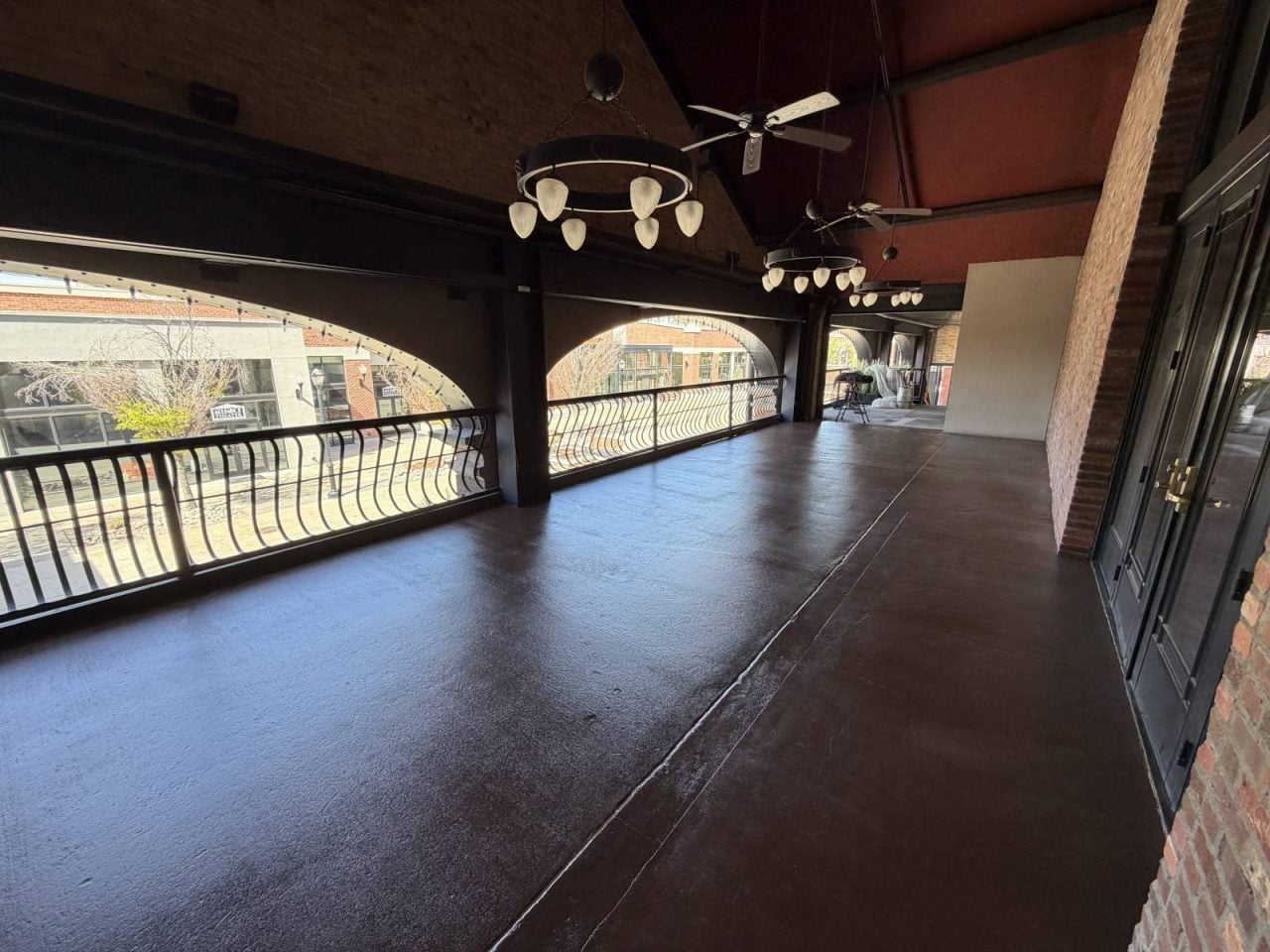
The Old Spaghetti Factory’s headquarters reviewed samples and landed on Saddle Brown. “This is a great rustic-looking color. It fits the aesthetic for the Old Spaghetti Factory,” says Dallin.
On a large commercial patio, batch-to-batch variance is a real risk. Mix enough buckets individually and subtle differences start showing up on the finished surface.
To avoid color variation, MDRN intermixed batches. They mixed each bag of Cem-Coat with four quarts of clean water and the pre-measured MTC colorant, allowed to slake for five minutes, then remixed. Once individual buckets were ready, they combined them before application.
Guide: How to Change the Color of Concrete
One unified batch, one consistent color across the whole pour. It’s a simple move that eliminates a common problem on large jobs.
Application and Sealing
Here’s how the base coat was applied. The crew started by brushing the material into joints and tight areas. From there, they switched to a standing roller to create even, consistent coverage across the patio.
Once the Cem-Coat cured, Dallin’s crew sealed the surface with two coats of Gem-Seal 100. It’s high-strength, solvent-based, and UV-stable. A good choice for a patio that sees heavy use. Find the best sealer for your project.
A few things worth knowing when sealing a job like this:
- Bleed the tip into a waste bucket for about five seconds before hitting the surface. This cycles air out of the lines and gives you a consistent stream from your first pass.
- Never wipe the tip with a rag. Fibers can lodge in the orifice and distort the spray pattern.
- Watch your tank level. As it runs low, the pump can start drawing air, leading to an inconsistent spray pattern. Refill before that happens.
Pro Tip Use a sprayer designed for the job. Here, the crew used a Swissmex DS-8350 acetone sprayer, which is compatible with Gem-Seal 100. The shoulder strap makes it easy to carry and gives you better control on larger surfaces.
The Result
The patio went from blotchy and weathered to clean, consistent, and built to last. Saddle Brown ties into the restaurant’s aesthetic in a way the original surface never did. More importantly, it’s a cementitious system now, not a topical film. The color is built into the coating, not just sitting on the surface.
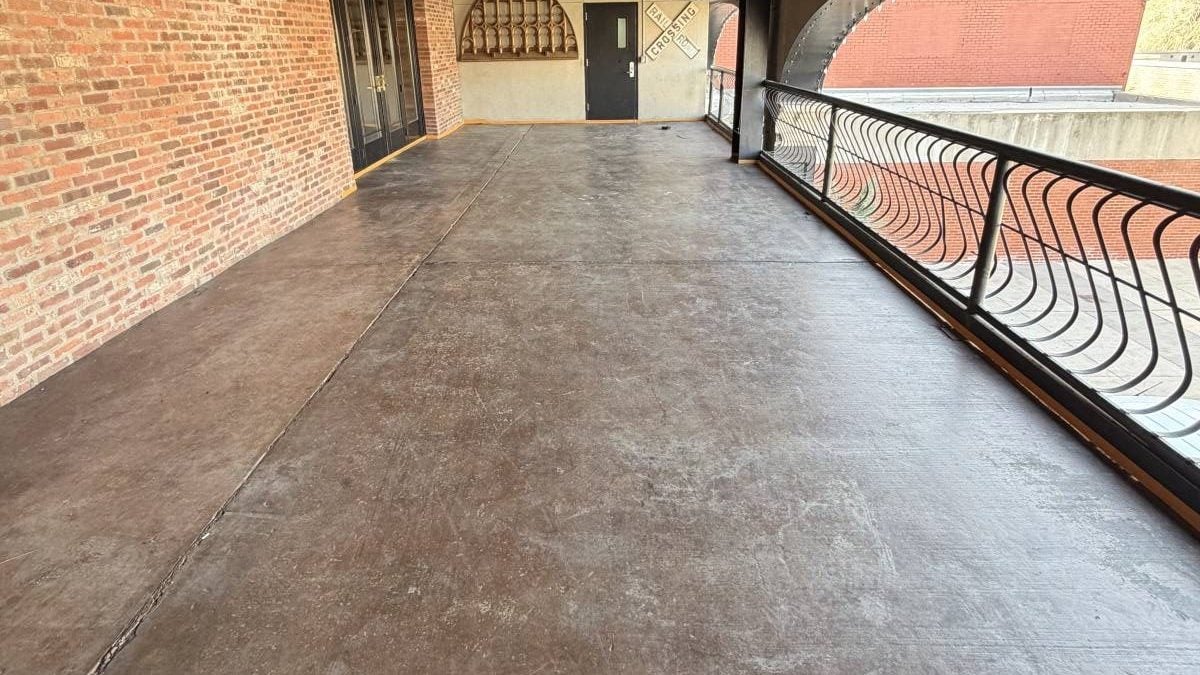
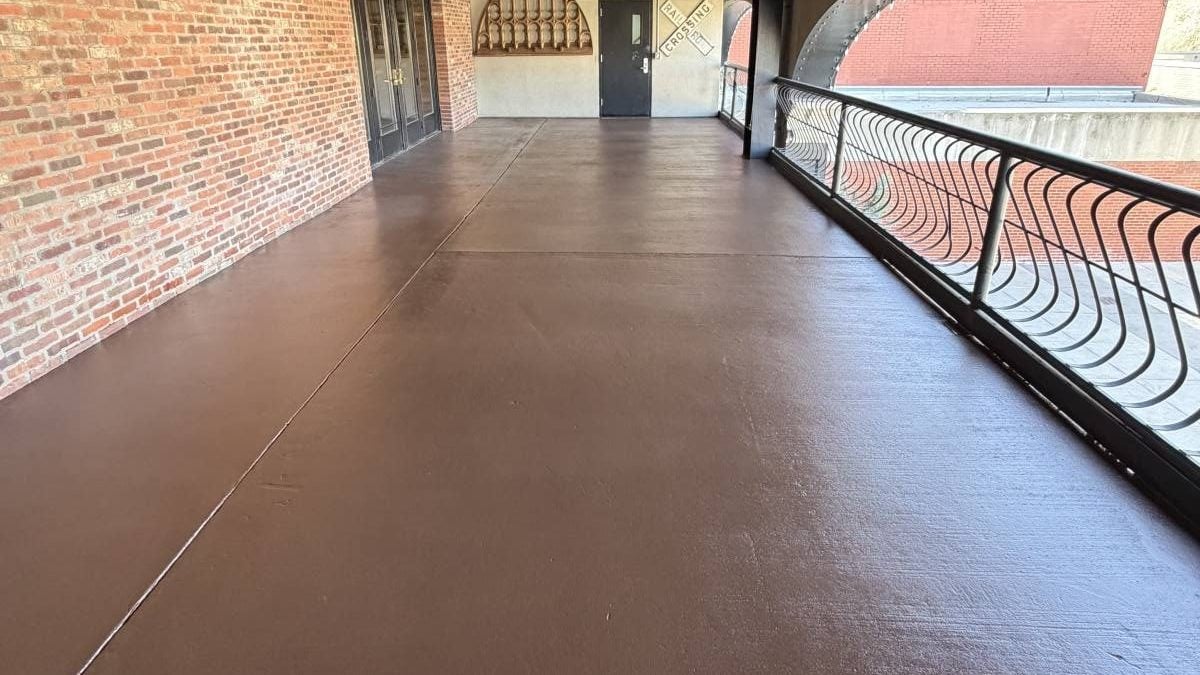
For a restaurant that relies on its patio as part of the dining experience, that’s not just a cosmetic upgrade. It’s a long-term performance upgrade.
Watch the full project video to see the transformation. For product specifications and coverage data, download the Cem-Coat Plus technical data sheet or contact your local Brickform distributor.
See More