Concrete Pool Deck Sealers 101
How to choose the right pool deck sealer for your concrete surface

You poured good money into that pool deck, so don’t let UV rays, salt spray or heavy foot traffic damage it. Choosing the right swimming pool concrete deck sealer comes down to your finish, climate, and how much upkeep you want to do.
A sealer acts like sunscreen and work boots rolled into one. It locks out water, blocks UV rays, and keeps folks from slipping on wet concrete. In this guide we’ll explore Brickform’s best sealers, match each one to a deck finish, and hand over the tricks we use on our own jobs.
Why Your Pool Deck Needs a Sealer
A good sealer doesn’t just sit on the surface—it actively shields and extends the life of your deck:
- Preserves vibrant color and resists stains. Blocks UV fade to keep your deck looking fresh, and keeps dirt, grime, and spills from leaving stains.
- Repels water & salt. Creates a barrier against splash-out, rain, and salt to prevent spalling and surface erosion.
- Prevents freeze–thaw damage. Stops moisture from migrating into the pores, so it can’t expand and pop off the top layer when temperatures dip.
- Guards against chemicals. Resists chlorine, algaecides, and other pool treatments that speed up surface wear and discoloration.
- Improves slip resistance. Holds Traction Grip in place or lets you pre-blend grit additives so wet areas stay safe underfoot.
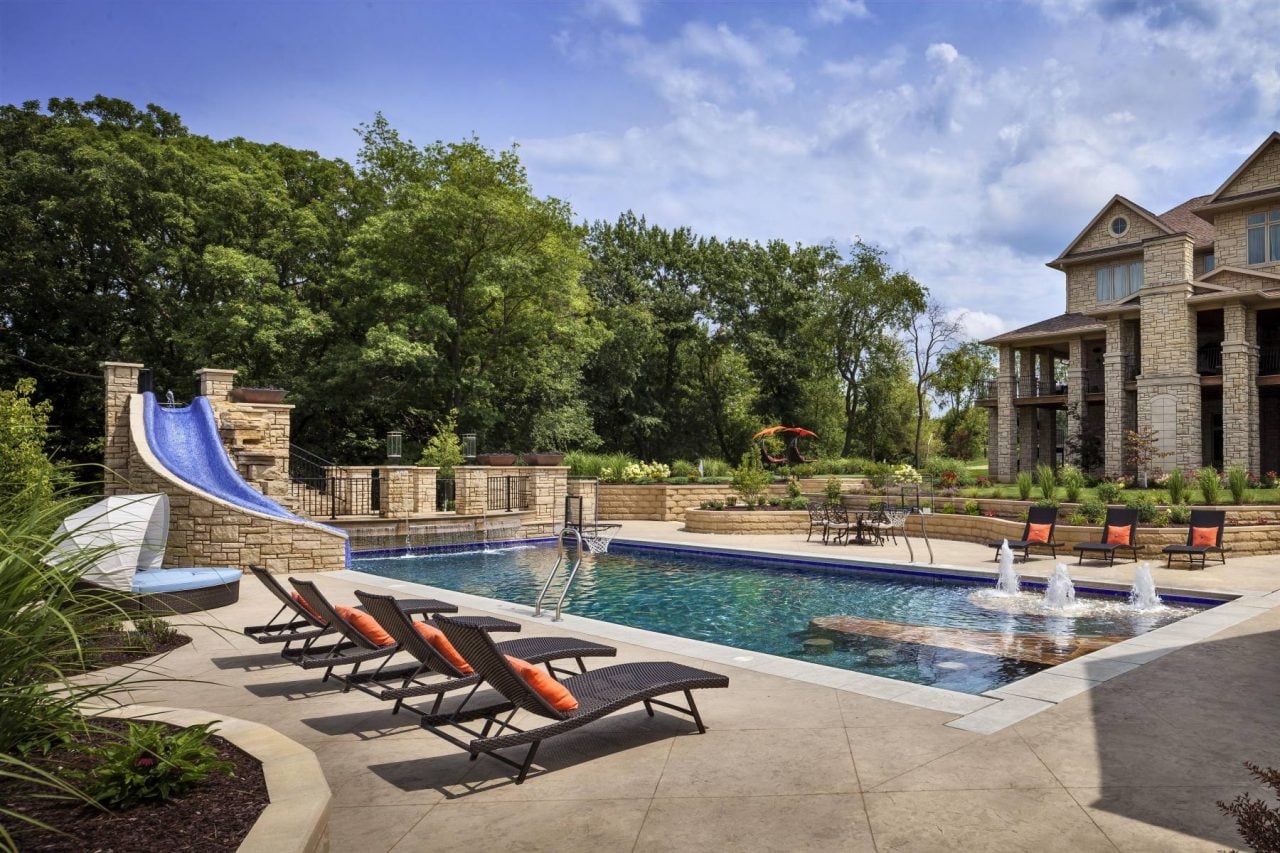
Ask These 5 Questions When Picking a Sealer
What type of finish are you sealing?
Is it stamped, exposed aggregate, broom finish, or a smooth overlay? Stamped and overlays benefit from film-forming sealers for color enhancement; while penetrating sealers suit aggregate and broom finishes.
What look are you going for?
Do you want a wet-look gloss or a natural matte? Gloss steers you toward acrylics; matte points you to penetrating/hybrid sealers.
What is your local climate?
Freeze–thaw winters or scorching sun? Silane/siloxane sealers prevent moisture-driven pop-outs, while UV-stable acrylics resist yellowing and chalking under relentless sun.
Which pool system do you run?
Chlorine or salt generator? Salt pools spray sodium chloride onto the deck, so choose a sealer engineered for chloride resistance. Standard chlorine pools typically do fine with an acrylic film sealer.
How often can you maintain your deck?
Film sealers need recoating every 18–24 months; penetrating sealers last three–five years but don’t enhance color as much. Pick the cycle you’ll stick to.
Which Sealer Type is Best for Your Pool Deck?
Below are the three types of pool-deck sealers Brickform offers. Pick the one that lines up with your finish, climate, and maintenance goals.
Acrylic Concrete Sealers
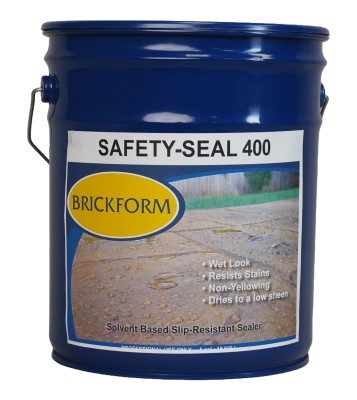
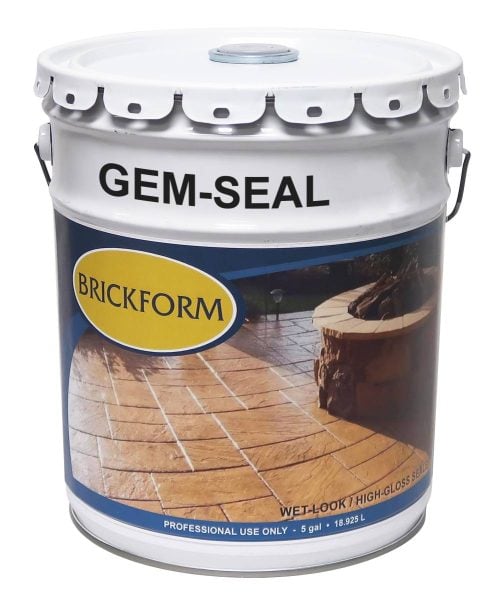
Gem-Seal • Poly-Seal • Safety-Seal
- Best for: Stamped concrete pool decks, colored overlays, or any slab you want to pop with a wet-look gloss.
- Surface feel: Leaves a thin film that’s easy to clean with a mild detergent.
- Ease of application: Quick to spray or roll, but technique-sensitive. Keep coats thin, back-roll puddles, and broadcast grit for slip safety.
- Slip safety: Film can get slick when wet. Broadcast Traction Grip® (or choose Safety-Seal™, which has grit in the can) while the first coat is tacky.
- Why choose it: Deepens color, blocks UV, and keeps water out. Plan on a quick reseal every 18–24 months to protect your concrete.
- Good to know: Most formulas are solvent-based, so ventilate the area and keep flames away on seal day.
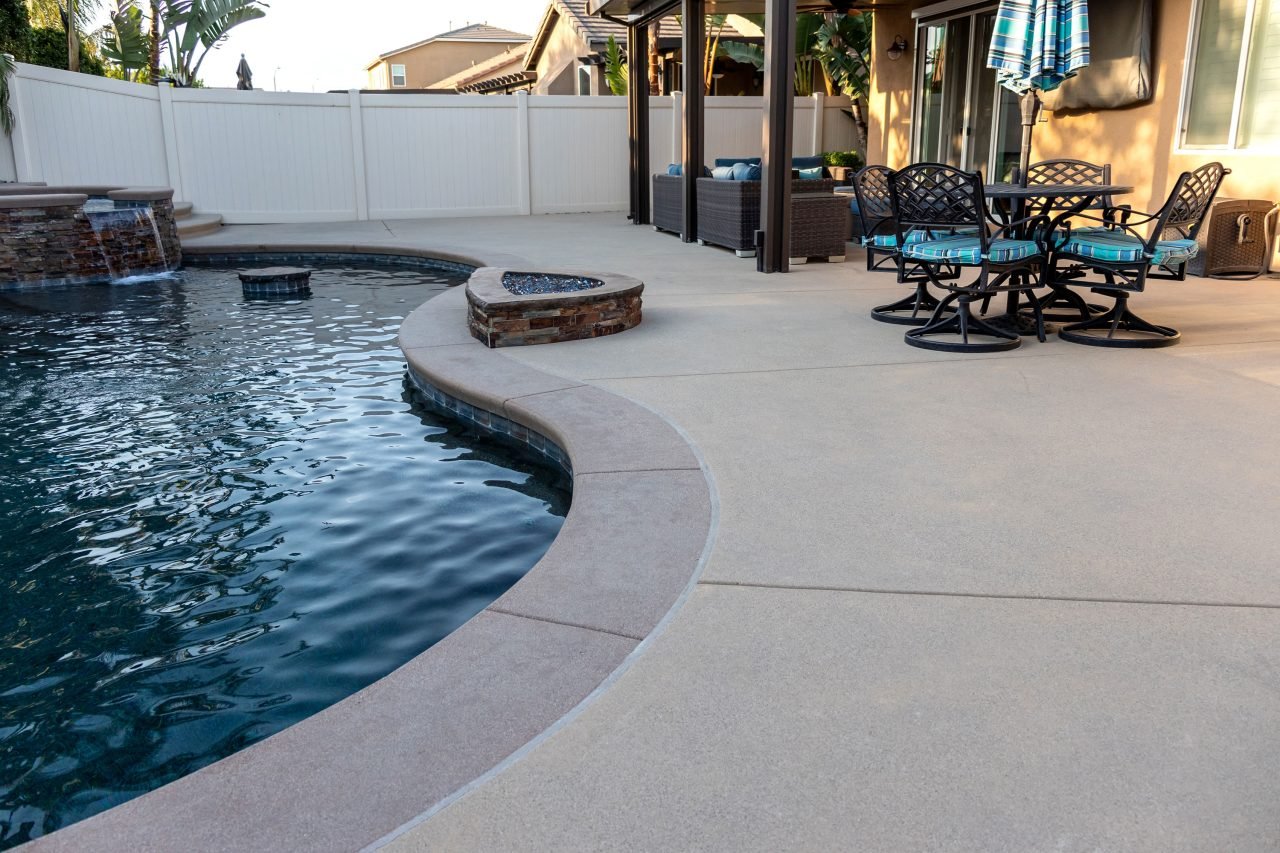
Penetrating & Hybrid Sealers
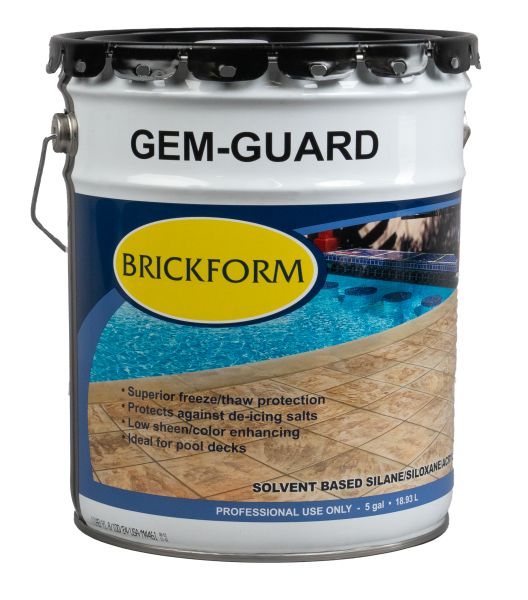
Stealth-Seal WB • Gem-Guard SB
- Best for: Exposed aggregate, broom-finished decks, and salt-water pool systems where you want zero gloss and maximum chloride protection.
- Surface feel: No film—silane/siloxane blends soak in and keep the concrete looking natural. Hybrids like Gem-Guard SB add a light film for extra stain resistance without feeling slick.
- Ease of application: The simplest film-free option: a coat or two with a sprayer, back-roll if pooling, and you’re don. No grit broadcast or lap-line worries.
- Slip safety: Because there’s no surface film, the deck keeps its original texture and traction.
- Why choose it: Repels water and de-icing salts, prevents freeze–thaw pop-outs, and stretches reseal cycles to three–five years.
- Good to know: Great choice in freeze–thaw climates or if you don’t want to fuss with frequent reapplication.
Project Spotlight
This Arkansas pool deck had failing and overapplied sealer that was sandblasted off, revealing a clean, porous surface ready for revitalization. Each stone was then hand-brushed with ARTesian Stain® and enhanced with Antique-It. Finally, the deck was sealed with heavy swim-lesson traffic in mind. “We went with the Gem-Guard 600 because it is non-film forming, offers really good slip resistance, and is much more durable than any film-forming sealers,” says Brickform’s Manny Gonzalez.
A&M Contracting
Cure & Seal Products
Gem Cure & Seal • Gem Cure & Seal WB
- Best for: A freshly poured pool deck when you want to protect your concrete from the start—these products cure the slab and leave a sealing film behind.
- Surface feel: Similar gloss to standard acrylics; adds mild color enhancement.
- Ease of application: Straightforward one-pass job on a fresh pour—as long as you hit the slab at the right “touch-dry” stage.
- Slip safety: Same as acrylics—broadcast Traction Grip® or another fine grit if the deck will see lots of wet foot traffic.
- Why choose it: Saves labor on new pours, meets curing specs, and keeps early moisture loss from checking or curling the slab.
- Good to know: Available in solvent (quick flash) or low-VOC water-based versions for enclosed or odor-sensitive jobs.
Choose the type that matches your deck’s finish and environment, follow the application steps, and you’ll have a pool deck sealer job that looks good and lasts.
How to Seal a Pool Deck
Sealer application is the biggest source of failures—most issues come from poor application. See our full How to Apply Concrete Sealer guide for tools, timings, and troubleshooting.
- Prep is the same for every sealer
Clean to CSP 1–2, rinse well, let the slab dry, and mask off anything you don’t want getting sealer on it. - Apply at least two light coats
Film-forming sealers: Spray or roll thin, back-roll shiny spots, and broadcast grit if you need slip resistance.
Penetrating / hybrid sealers: Mist on light “wet-out” coats, let them soak in, quick back-roll only if liquid pools. No grit needed. - Let it cure
Foot traffic is fine the next day. Wait 72 hours for furniture, pool chemicals, or heavy gear.
💡 Pro Tip:
For exact coverage rates, recoat windows, and safety data, always follow the Technical Information Sheet (TIS) for your specific Brickform product.
FAQs
Will one product work on both my salt‑water pool deck and driveway?
Yes. Stealth-Seal WB is a hybrid silane/siloxane that blocks freeze–thaw damage, oil stains, and salt intrusion, so you can coat the pool deck today and the driveway tomorrow without switching products. Just be sure the surface is clean and bone-dry before you roll or spray.
When can I jump back in the pool after sealing?
Give the deck 24 hours for light foot traffic; wait the full 72 hours before kicking on the heater, adding chemicals, or dragging furniture across it. Cooler temps or high humidity? Add a few extra hours—curing slows down when the slab stays damp or the air is below 60 °F.
How often should I reseal my concrete pool deck?
Most film-forming acrylic sealers need a fresh coat every 18–24 months—sooner if the deck sees salt-water splash or heavy foot traffic. Penetrating sealers (think silane/siloxane) can run three to five years before they need attention. The easy test: sprinkle a little water—if it no longer beads, it’s time to reseal.
Should I use a roller or sprayer?
Both work. A low-pressure, solvent-resistant sprayer lays down thin, even coats fast; a ⅜-inch nap roller helps you back-roll puddles and push grit into the film. Whichever you choose, keep coats light (about 300 sq ft per gallon) and maintain a wet edge to avoid lap lines.
What if my pool deck sealer turns out hazy or bubbled after application?
This usually comes from sealing in the heat or applying too heavy a coat, both common on pool decks with direct sun exposure. Before you strip and reseal, Sealer Rescue+ can often revive the existing film and fix the appearance.
See More